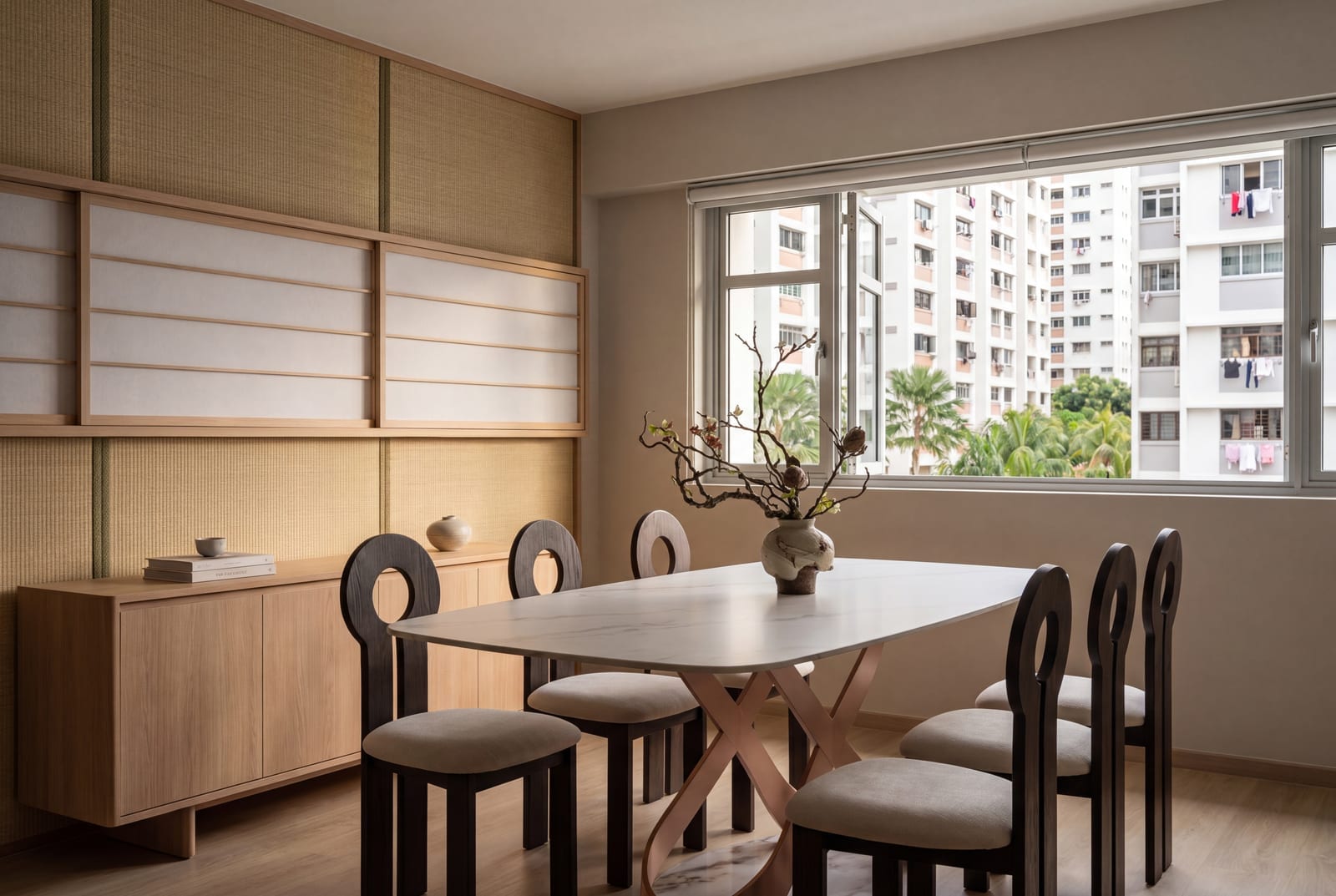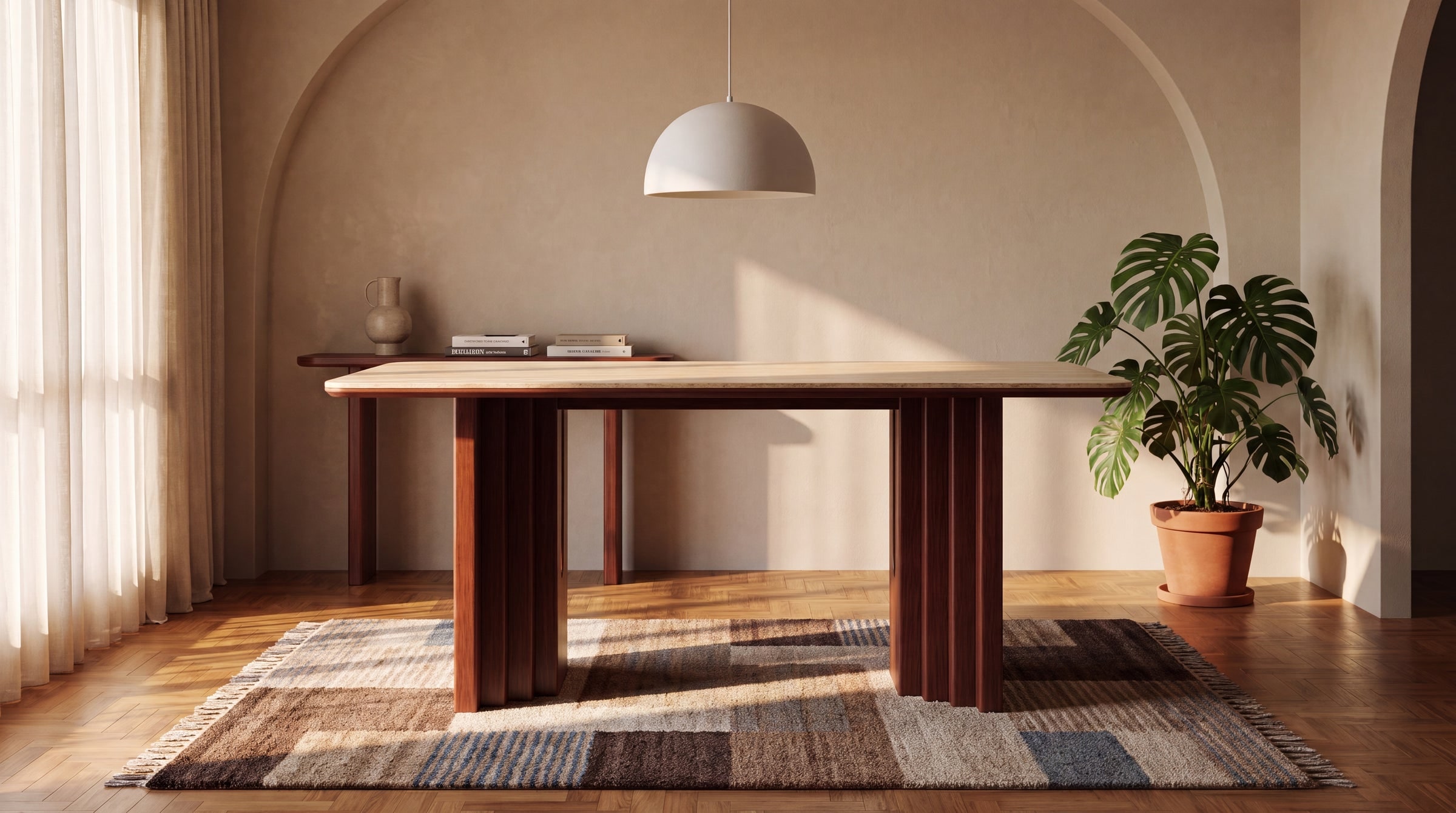
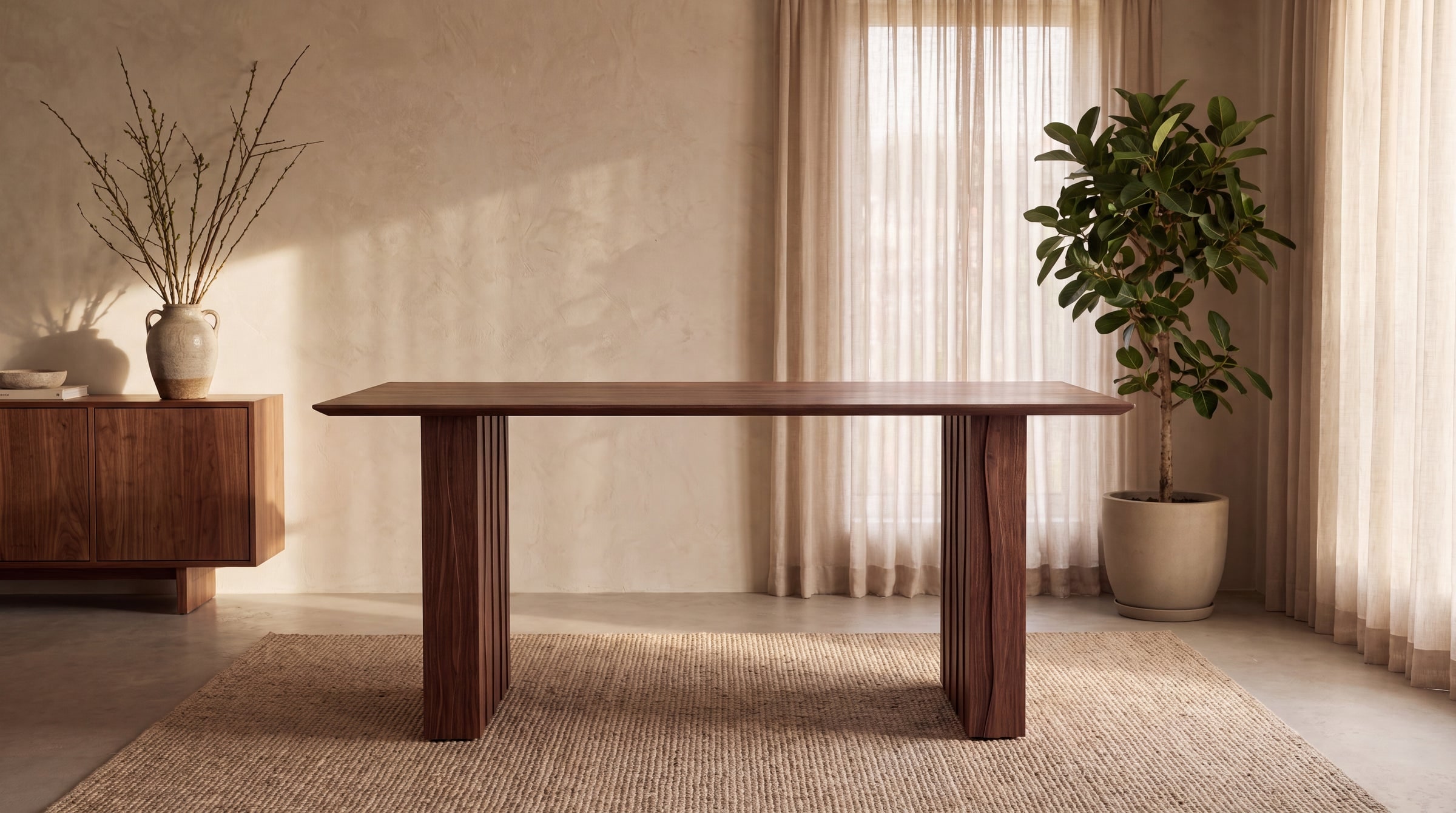
Solid wood is beautiful, durable, and in Singapore's climate, surprisingly temperamental if you don't care for it properly. The combination of high humidity and sudden aircon cycles stresses wood in ways that temperate climates don't. But the care routine is simple — less than 10 minutes a week — and it goes a long way towards furniture that lasts decades rather than cracking within a few years.
Why Singapore is hard on wood
Wood is hygroscopic — it absorbs and releases moisture from the surrounding air. In Singapore, outdoor relative humidity averages around 80–85%, and higher overnight. Turn on the aircon and a closed room can drop to around 50–60% within hours. The wood expands when damp, contracts when dry, and over time this movement causes splits, warping, and joint separation.
This is why proper kiln-drying matters so much. Timber that has been dried to a moisture content close to what it will settle at indoors, and given time to stabilise before it's made into furniture, moves far less than wood that's still wet when it's built and meets Singapore's climate for the first time in your living room.
The weekly routine
- Dust with a dry microfibre cloth. Skip paper towels — they can be slightly abrasive and leave fine scratches in the finish over the years.
- Wipe spills immediately. The longer a liquid sits, the more chance it has to get past the finish.
- Use coasters. Hot mugs and cold glasses both mark wood. Coasters are not decorative — they're functional.
- Rotate table items. A vase that sits in the same spot for months leaves a pale circle when you finally move it.
Occasional conditioning
How you condition wood depends on its finish, so check the care notes first. Lacquered or sealed pieces, which covers most modern furniture, don't need feeding: a damp-then-dry wipe and the occasional silicone-free polish is plenty. Oil-finished wood benefits from a thin coat of a suitable furniture oil every few months, or whenever it starts to look dry. Wax-finished pieces get a light re-wax now and then. Apply sparingly with a soft cloth, buff with another soft cloth. The wood should look fed, not greasy.
Avoid aerosol sprays marketed as "furniture polish". Many contain silicones that build up over the years and are very hard to remove without refinishing.
What to avoid
- Direct sunlight: UV changes the colour of wood over months — some species fade, others darken. Close blinds in west-facing rooms during peak sun hours.
- Ammonia-based cleaners: Glass cleaners and the like can cloud and damage lacquer finishes. Use a soft damp cloth for wood surfaces instead.
- Wet fabrics: A damp placemat left overnight can leave white, cloudy rings in the finish.
- Heavy objects dragged, not lifted: Scratches cost more to fix than the 10 seconds it takes to lift.
Spot repairs
White water rings: These are moisture trapped in the finish. Lay a dry cotton cloth over the mark and press with an iron on low heat, no steam, for a few seconds at a time, checking as you go; test on a hidden spot first. The heat drives the moisture out. Dark rings mean water has reached the wood itself, which is a job for a restorer.
Small scratches: A matching furniture marker or wax filler stick blends most minor scratches. Match the finished colour, and if you're unsure, go a shade lighter — it's easier to darken than to lighten.
Small dents: A damp cloth and a hot iron can swell the wood fibres back. It works best on oiled or unfinished solid wood. Don't try it on veneer, which can lift off the board beneath, or on a lacquered finish, which the steam can cloud.
When to call a professional
Some problems need refinishing. Deep splits (not just surface checks), warping that affects functionality, joint separation, and large burns or gouges are all professional-level repairs. A good furniture restorer can often refinish a solid wood dining table for far less than replacing it would cost, and give it many more years of use. Prices depend on size and damage, so get a quote.
Before you buy solid wood
Not everything sold as "wood" is solid timber, and the care differs. Ask whether a piece is solid wood, multi-ply board with a wood veneer, or engineered board, and whether the timber was kiln-dried. On our product pages, the materials list spells out which parts are solid wood and which are veneer or board, and every piece carries a 2-year warranty against manufacturing defects under normal use. For how we choose the factories that make them, see our piece on why we source from China.