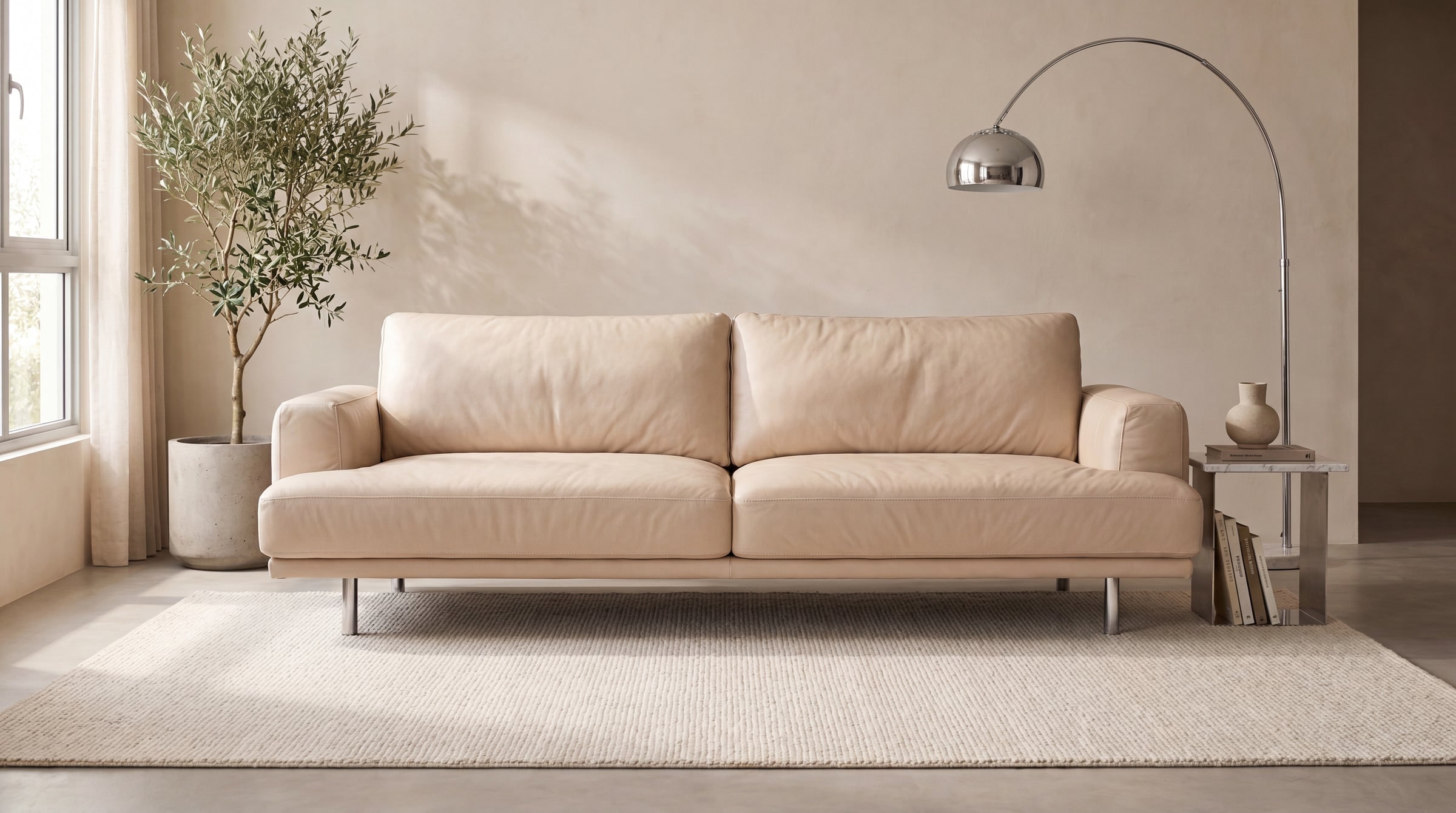
Fabric or leather? It's the first real decision after you've picked a sofa size. And most of the generic advice online — written for temperate climates — doesn't account for what Singapore actually does to upholstery. Here's the honest comparison for homes that live with year-round humidity, daily aircon cycles, and the occasional tropical spill.
The Singapore context: why this question matters
Our climate is hard on furniture. Relative humidity averages around 80–85%, climbing past 90% overnight and dipping to around 60–70% on sunny afternoons. Aircon can take a room from the low 30s down to the low-to-mid 20s °C and back again every day, drying the air as it goes, so materials keep expanding and contracting. Add in ceiling-fan dust, tropical sun through west-facing windows, and the occasional spilled kopi, and you have a stress test that furniture designed for temperate climates wasn't built for.
The same sofa can age noticeably faster here than it would in a temperate climate. Picking the right material isn't just about looks — it's about how long the sofa lasts.
Fabric sofas: the case for them
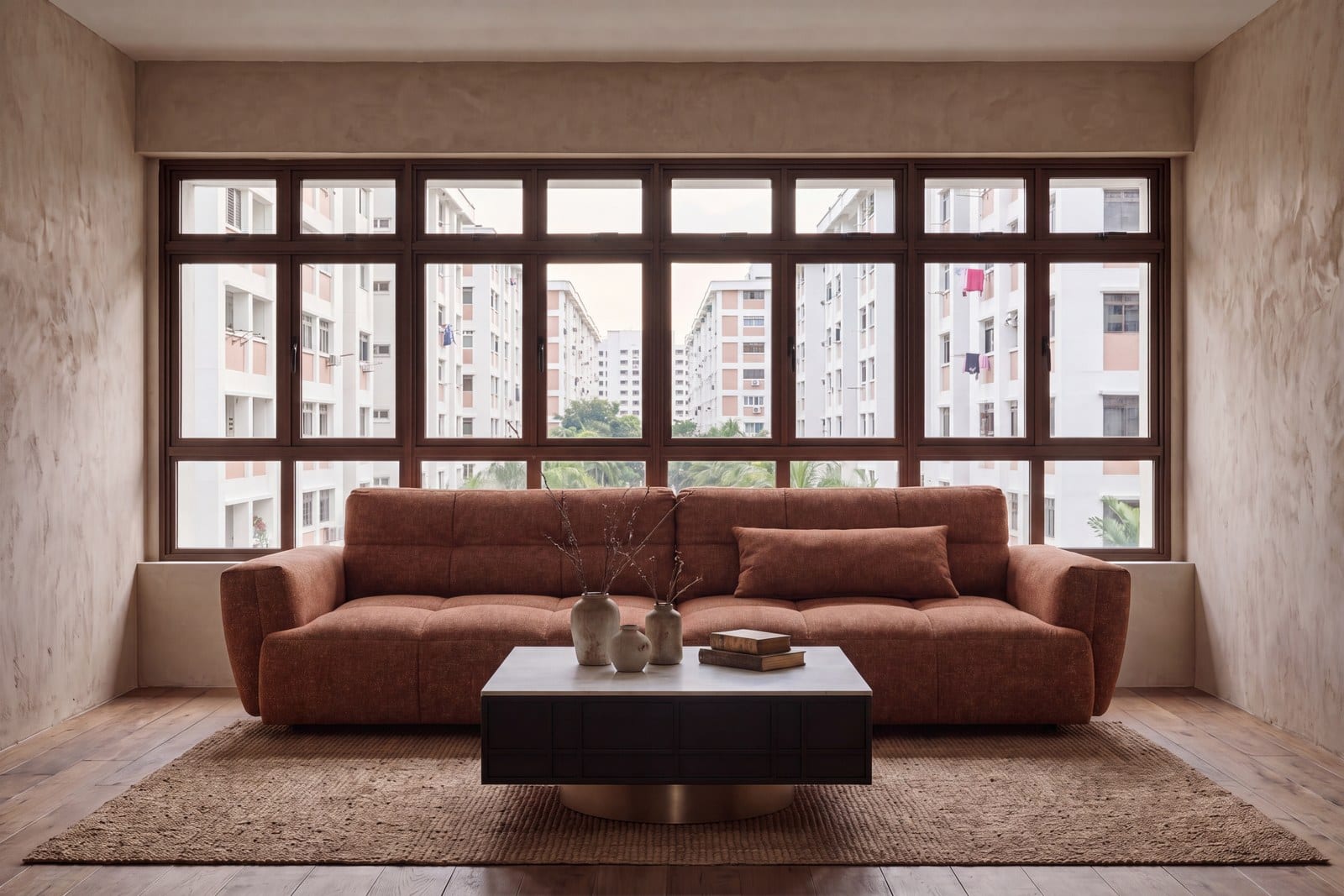
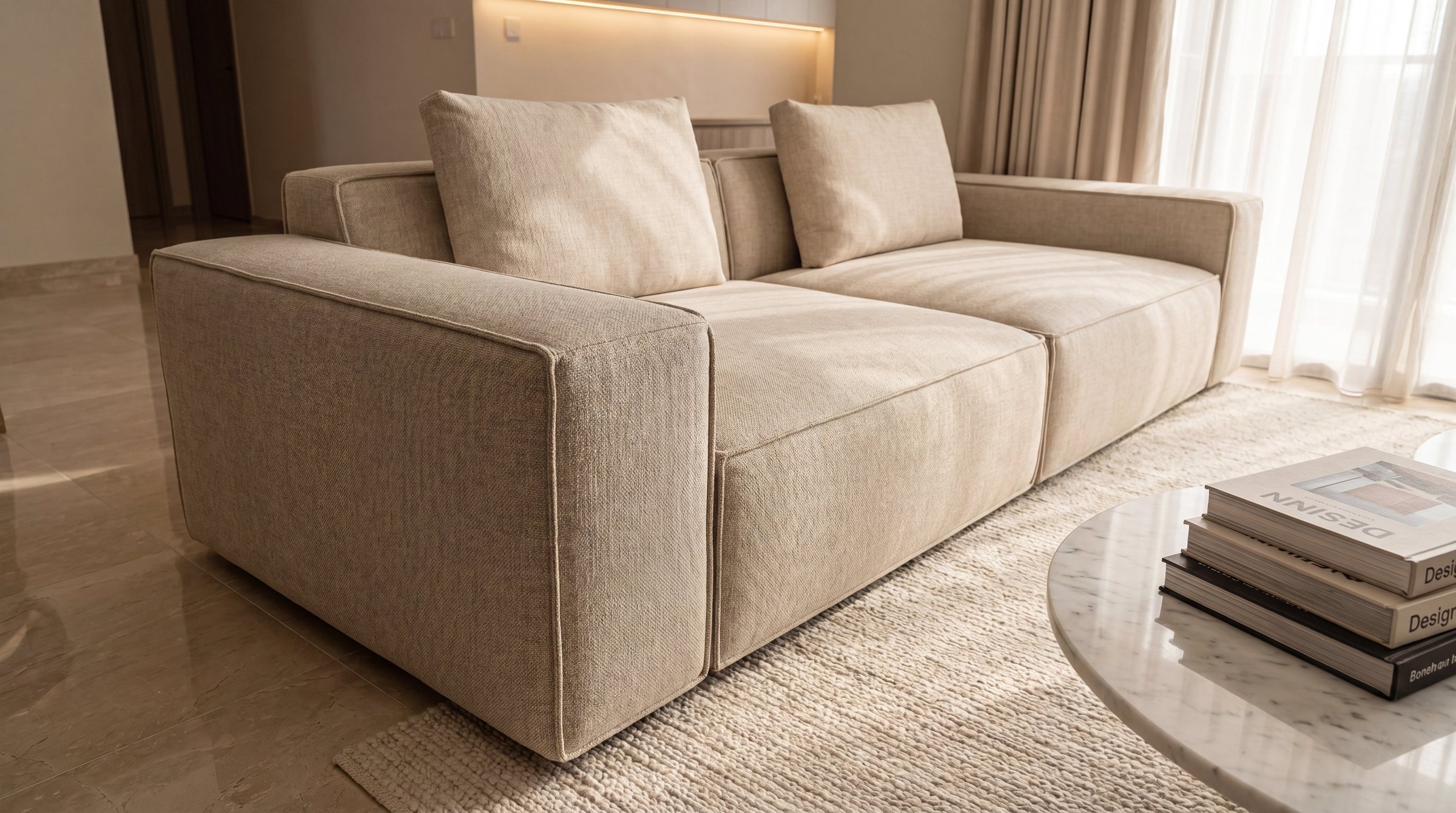
Fabric has real advantages in a tropical home. It breathes, so it doesn't feel sticky against bare skin in a non-aircon room. It comes in a wider range of colours and textures, so it's easier to match your existing decor. And modern performance fabrics — polyester-olefin blends, Crypton-style coatings — are genuinely stain-resistant in a way earlier generations of fabric weren't.
- Cooler on the skin — important if you don't run aircon 24/7
- Quieter — no creaking or sticking as you shift
- Wider design range — textures, patterns, bolder colours
- Often less expensive at equivalent quality tiers
Fabric sofas: the drawbacks
Fabric absorbs everything. Coffee spills, cooking smells, sweat, pet dander, dust mites. Even the best performance fabrics need regular vacuuming and occasional deep cleaning. And fabric fades in direct sun: a sofa in the path of west-facing afternoon sun can visibly fade within a few years.
- Harder to spot-clean than leather; liquids soak in fast
- Harbours dust mites and allergens unless vacuumed regularly
- Fades in direct sun — often visibly within a few years
- Pet hair clings and can be a daily removal task
Leather sofas: the case for them
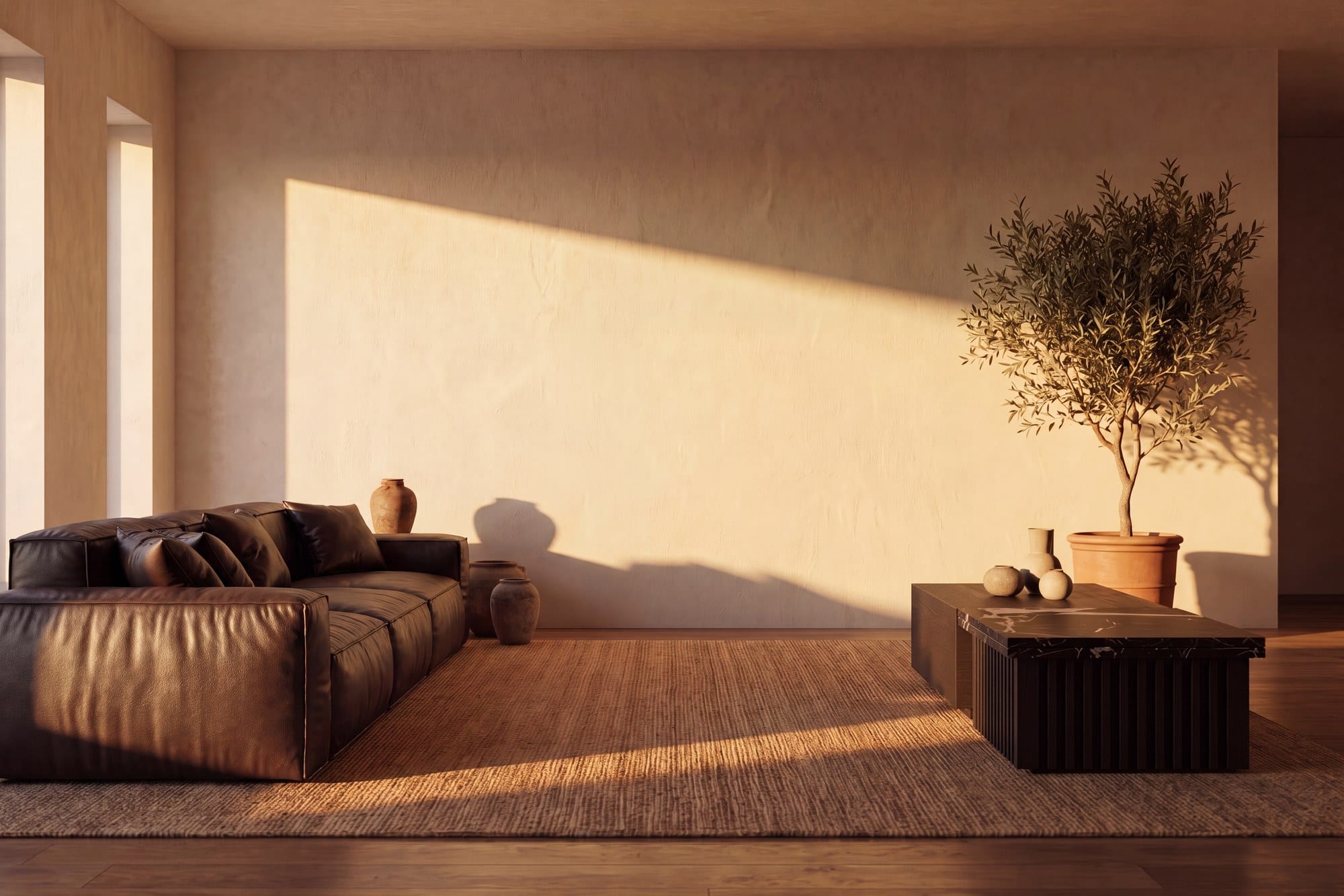
Real leather — not bonded leather, which is a different product entirely — is a wipeable, durable, long-lasting material. Most spills come off with a damp cloth. It resists dust mites. It ages with character rather than wearing out, developing patina the way a good pair of boots does.
Real leather copes with humidity better than many people expect, as long as it gets some airflow and a conditioner about every six months (our leather care guide has the routine). What leather doesn't like is direct sun (it dries and cracks) and being left damp in still, humid air (mould).
- Wipe-clean surface — spills rarely become stains
- Copes with humidity — given airflow and occasional conditioning
- Ages with character — develops patina instead of wear
- Doesn't trap dust or pet hair — good for allergy-prone homes (though claws will mark it)
Leather sofas: the drawbacks
Leather feels sticky against bare skin in warm rooms. If your aircon isn't running, the sofa will feel it. And real leather usually costs noticeably more than fabric at a comparable quality level.
Then there's the bonded leather trap. Bonded leather (sometimes sold as "reconstituted leather") is shredded leather scraps bonded to a fabric backing and coated with polyurethane. It looks like leather on day one and can peel like a sticker within a few years. "PU leather" is different again: fully synthetic, a polyurethane coating on fabric. And "leather match" (or "contact-surface leather") means real leather where you sit and lean, with a colour-matched synthetic on the outer sides and back. That last one can be a sensible way to save money, since the surfaces that take the wear are real leather; just know which is which. If a "leather" sofa's price seems too good to be true, ask exactly what it's made of.
The in-between options
If you can't decide, consider these middle paths:
- Performance microfibre: Looks like suede, wipes clean easily. Great for kids and pets.
- Easy-clean polyester: The workhorse of the modern sofa market. Affordable, durable, reasonably stain-resistant.
- Semi-aniline top-grain leather: A light protective finish keeps a softer, more natural look than heavily corrected leather, while still resisting everyday spills.
Our recommendation
A quick decision matrix:
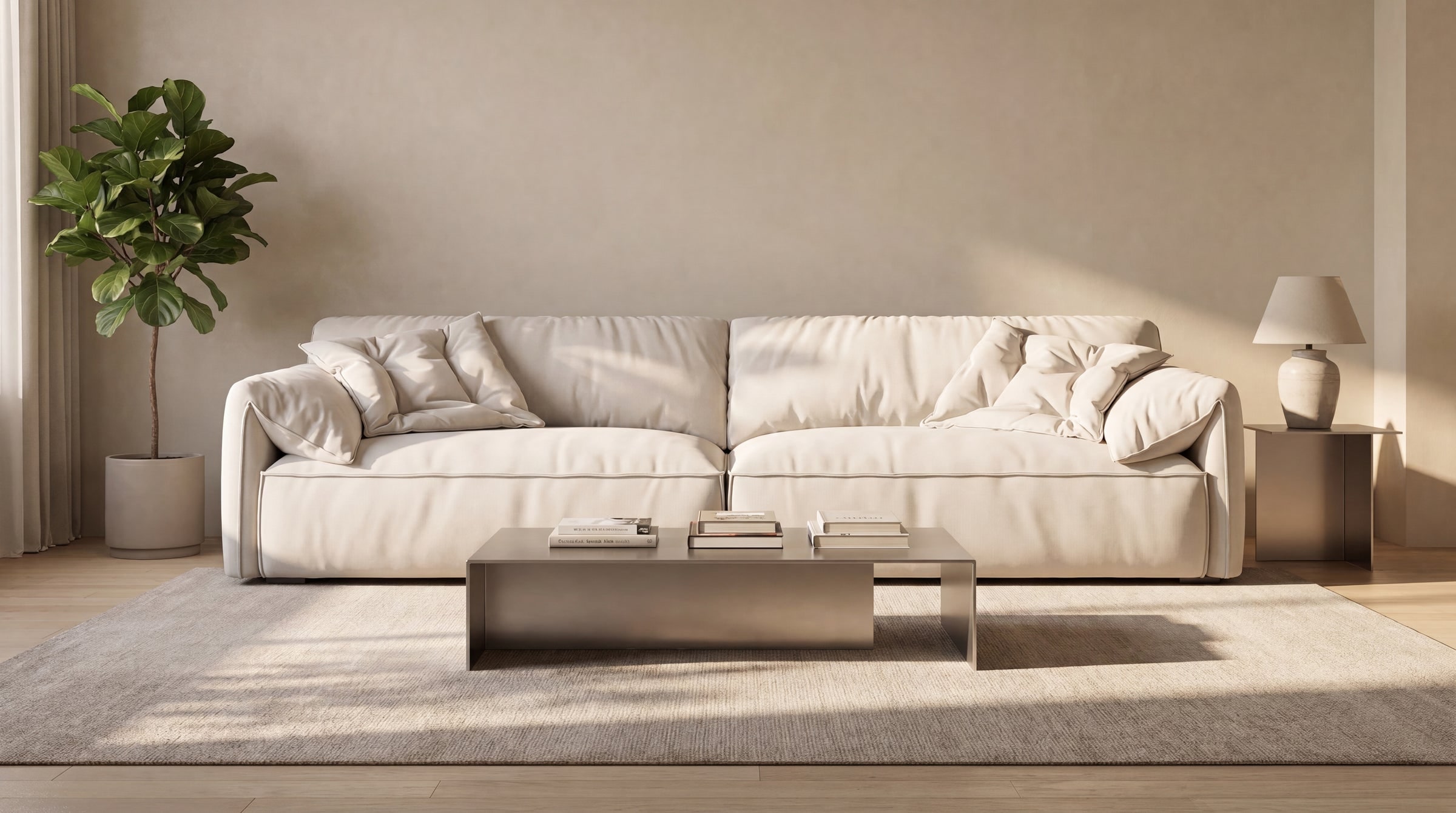
- Household with kids or pets: Performance fabric with a removable, washable cover
- Aircon runs most of the day, adults only, spills rare: Top-grain leather
- Sunlight-heavy living room: A darker or solution-dyed performance fabric, plus blinds; leather needs shade just as much
- Tight budget: Performance polyester — it can last many years if you rotate cushions and vacuum weekly
- Want a piece for the long haul: Good top-grain or full-grain leather on a solid frame, kept out of direct sun and conditioned
There's no single right answer — only the right answer for your household. But avoid bonded leather categorically, and avoid any fabric with a "dry clean only" care label.
Browse our sofas →