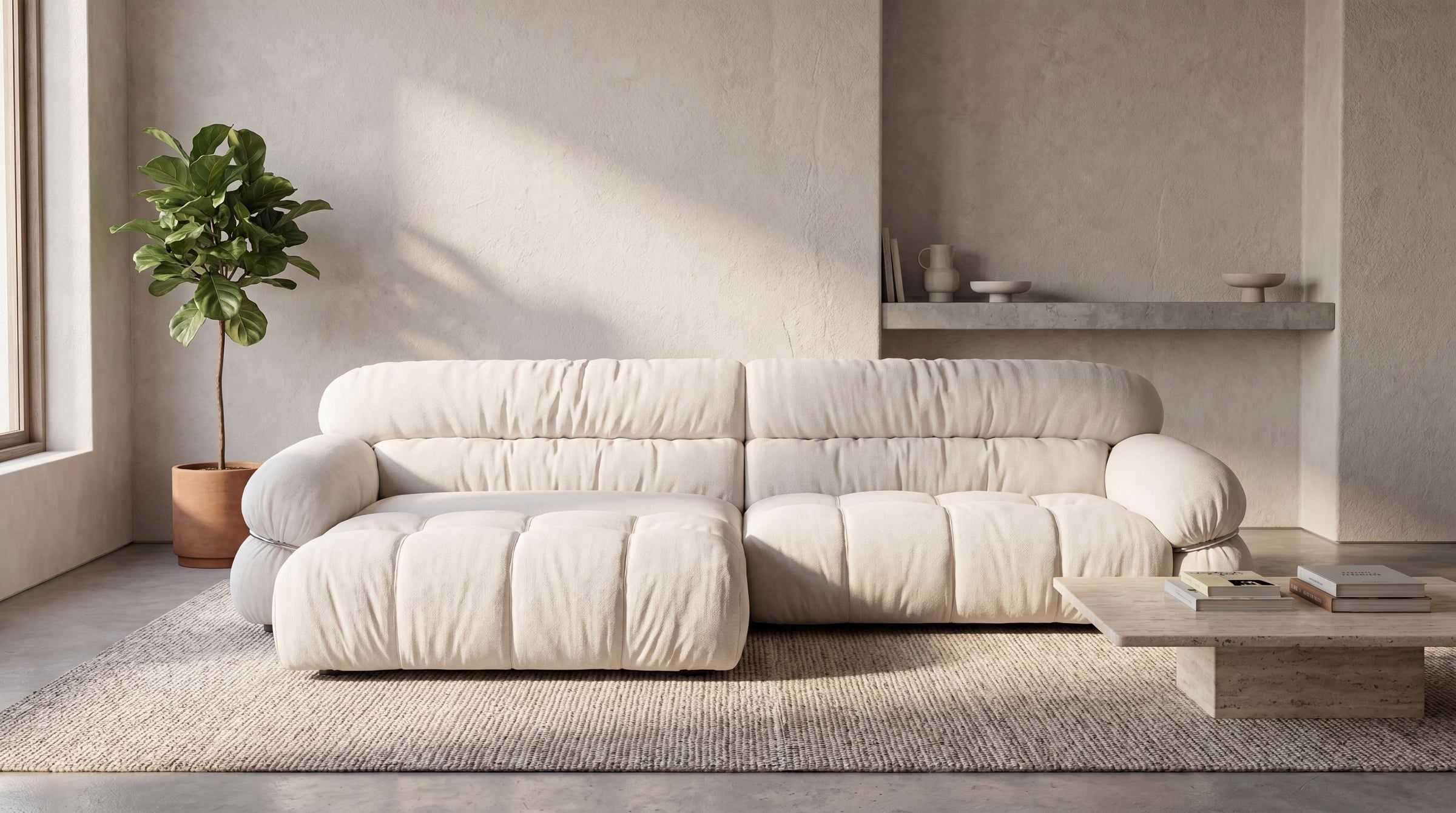
It's one of the questions we hear most: L-shape or 3-seater? The short answer is that it depends entirely on your room shape and how your household actually sits. The long answer takes a few minutes — and it's worth the time, because you'll live with this decision for years.
The short answer
Space requirements compared
An L-shape takes more floor than a 3-seater, and it spreads that floor into the room; a 3-seater sits flat against one wall. Sizes vary a lot by brand, so treat these as rough guides:
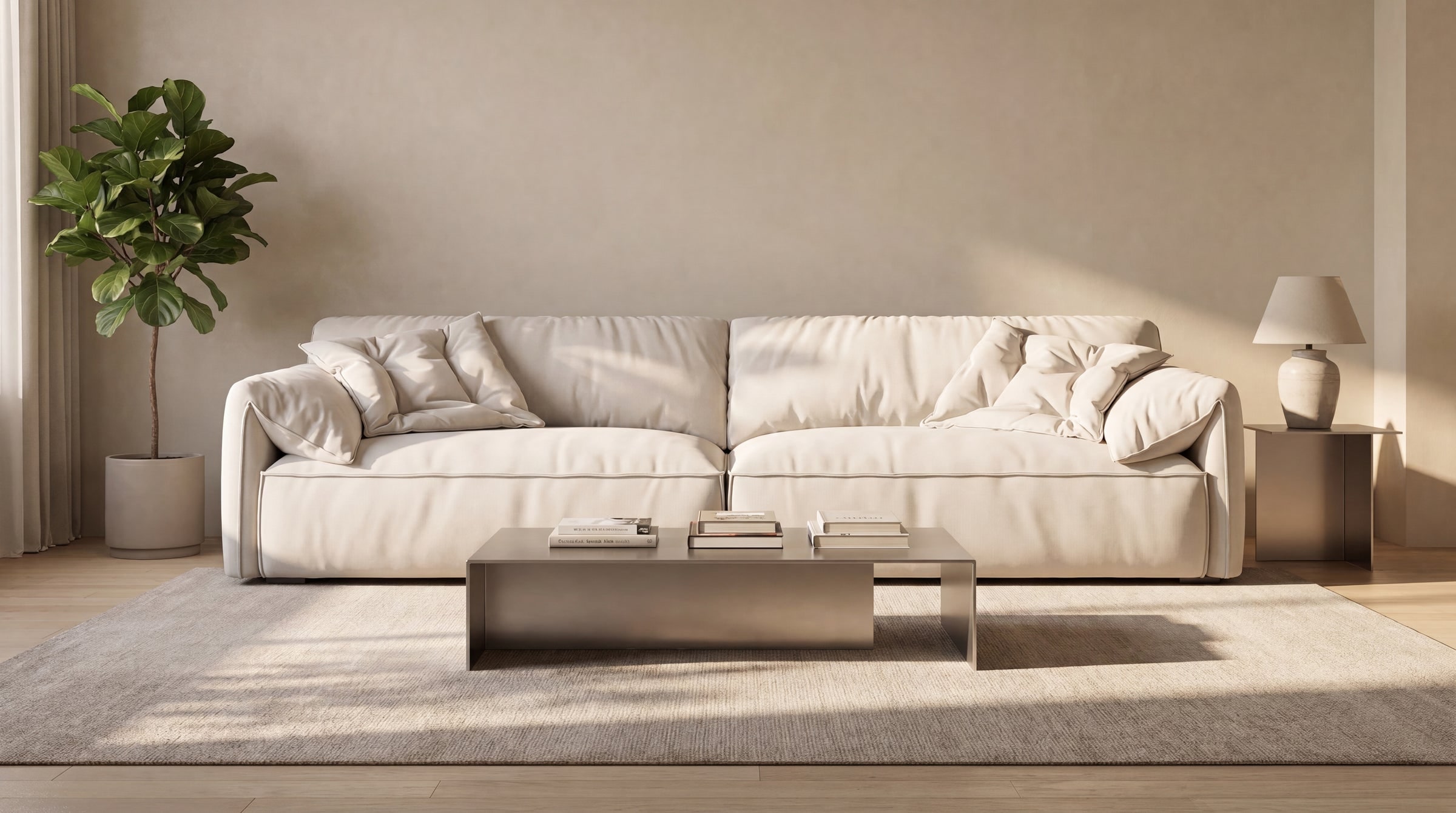
- 3-seater: anything from about 200cm to 280cm+ wide, and roughly 90–110cm deep (deeper for lounge-style sofas). Needs a wall at least as long as the sofa, plus about 2m of depth for the sofa, a 40–60cm gap and a coffee table.
- Small L-shape: around 230–260cm along the long side and 150–170cm along the chaise. Needs a corner with walls a little longer than both, plus walkway space on the open sides.
- Large L-shape / sectional: 280cm+ along the long side. Needs open-plan space or a generously sized living room.
Seating capacity: when 3 is enough, when you need 5+
A 3-seater comfortably seats three adults — or two adults lounging with a child. An L-shape comfortably seats 4–5, and in a pinch, 6. If you regularly have four or more people in the living room at once (growing family, regular movie nights, multi-generation household), the L-shape earns its footprint.
If it's usually just the two of you, a 3-seater is plenty — and you can always add a lounge chair for guest nights.
Flexibility: L-shape's "island problem"
A 3-seater pushes against a wall. The day you want the TV on a different wall, you move the sofa. Easy. An L-shape locks in your layout — you've committed to a specific corner and a specific orientation.
This matters more than people think. It's a common regret: a year in, people realise the TV should have been on the opposite wall, or they want to host differently, or a baby arrives and the layout no longer works. A 3-seater forgives these changes; an L-shape doesn't.
Modular sofas solve this, usually at a price premium — they're sectionals designed to be reconfigured.
Cost and resale implications
At equivalent build quality, an L-shape usually costs noticeably more than a 3-seater: more upholstery, more frame, more cushioning. On the resale market, 3-seaters tend to move faster because they fit more rooms, while an L-shape can sit on Carousell for a while because the next buyer needs the same corner orientation — which isn't always reversible. Our guide to left- vs right-facing L-shapes explains how to get the orientation right.
Layout examples
A 3-seater works as the anchor piece: push it against the longest wall, put a coffee table in front, TV or media wall opposite. Simple, flexible, works in most HDB living rooms.
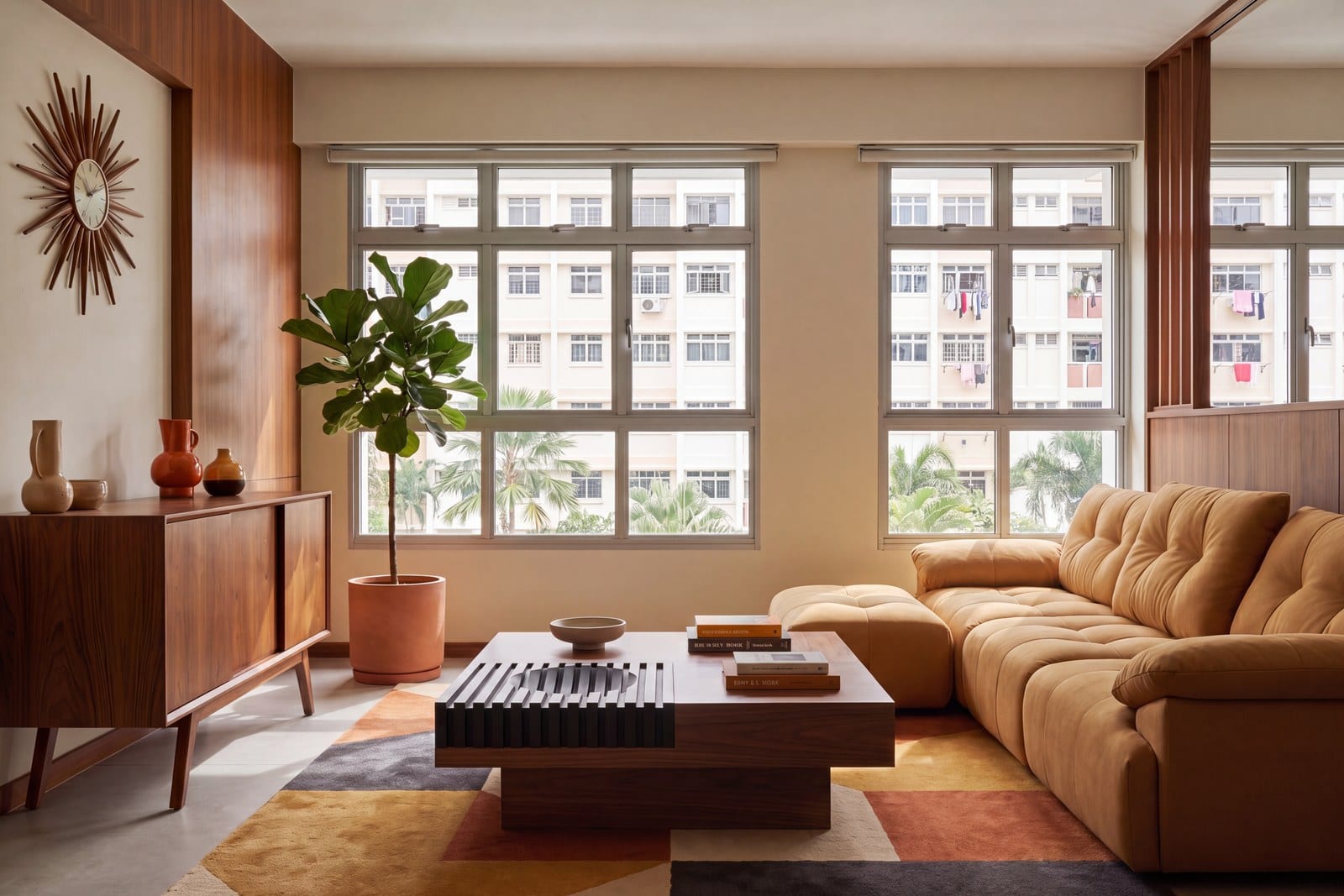
An L-shape shines in two specific situations: 1) when you have a clear corner and want to use the corner as a reading nook, and 2) when your living and dining areas are open-plan and you need the sofa to define where one ends and the other begins. The chaise lounge acts as a soft divider.
Our picks
For an L-shape that defines an open-plan living area:
Browse our sofas →For a compact sofa with room left for an accent chair, pair a 2-seater with one of these:
Browse our lounge chairs →