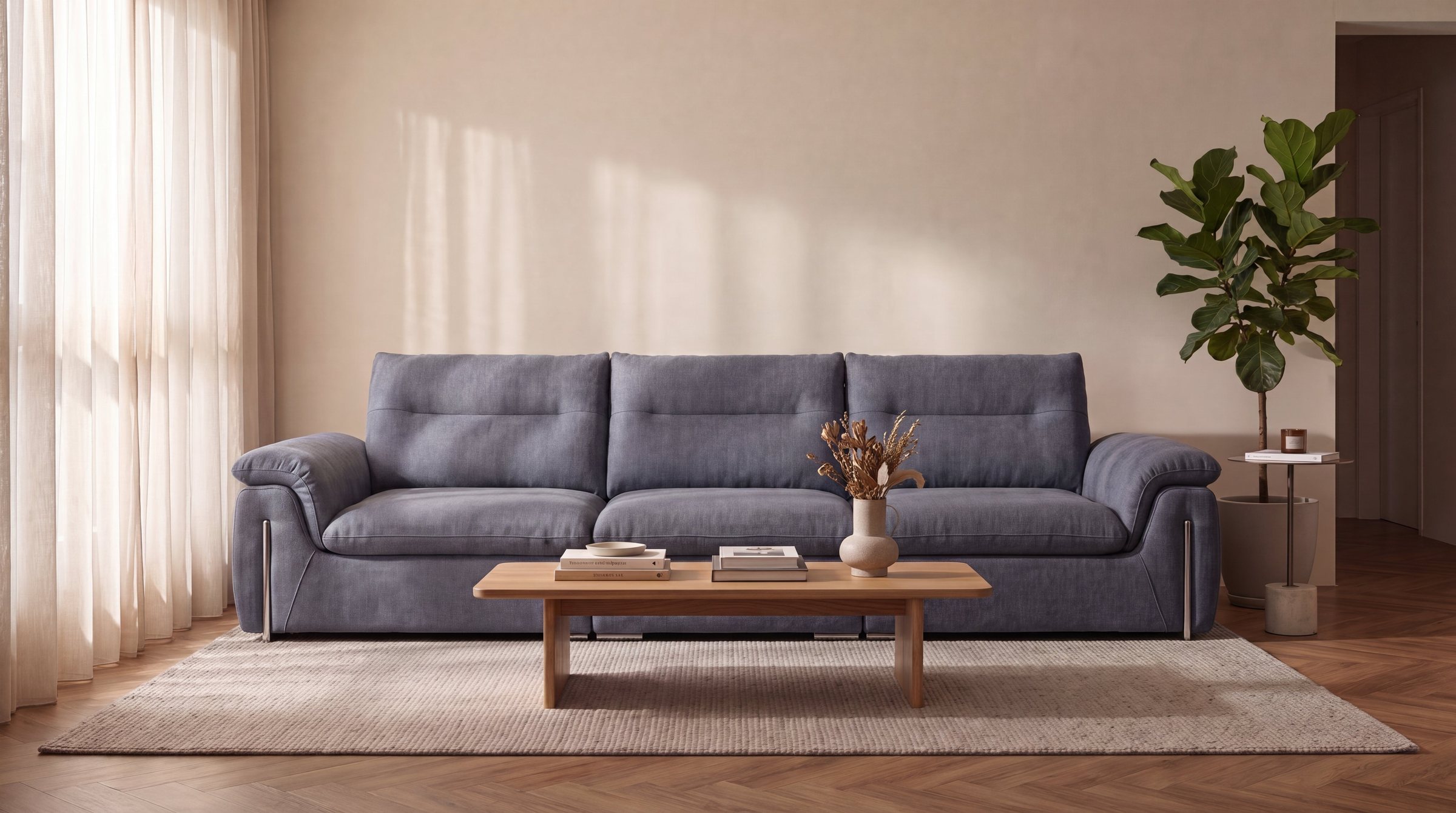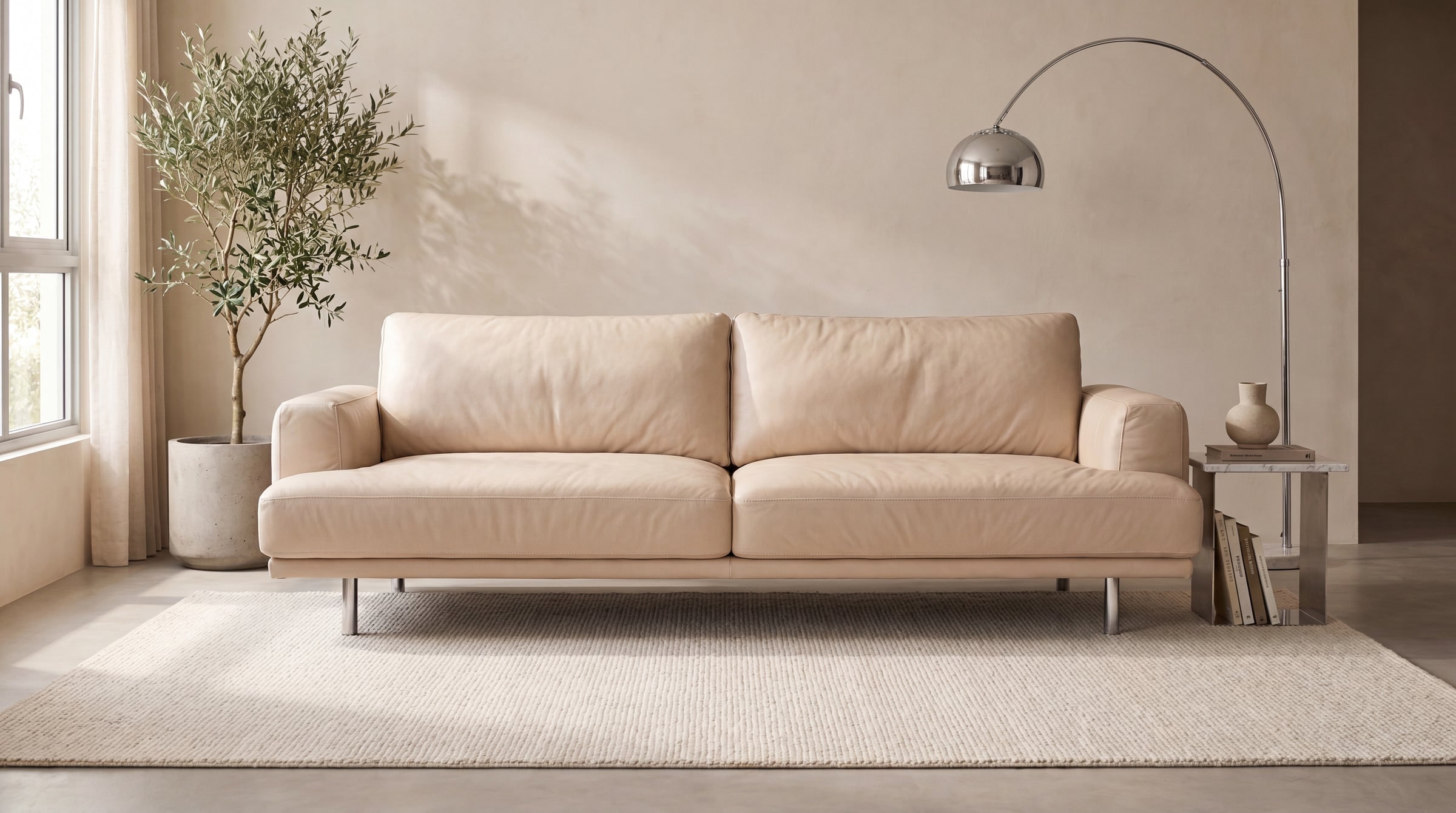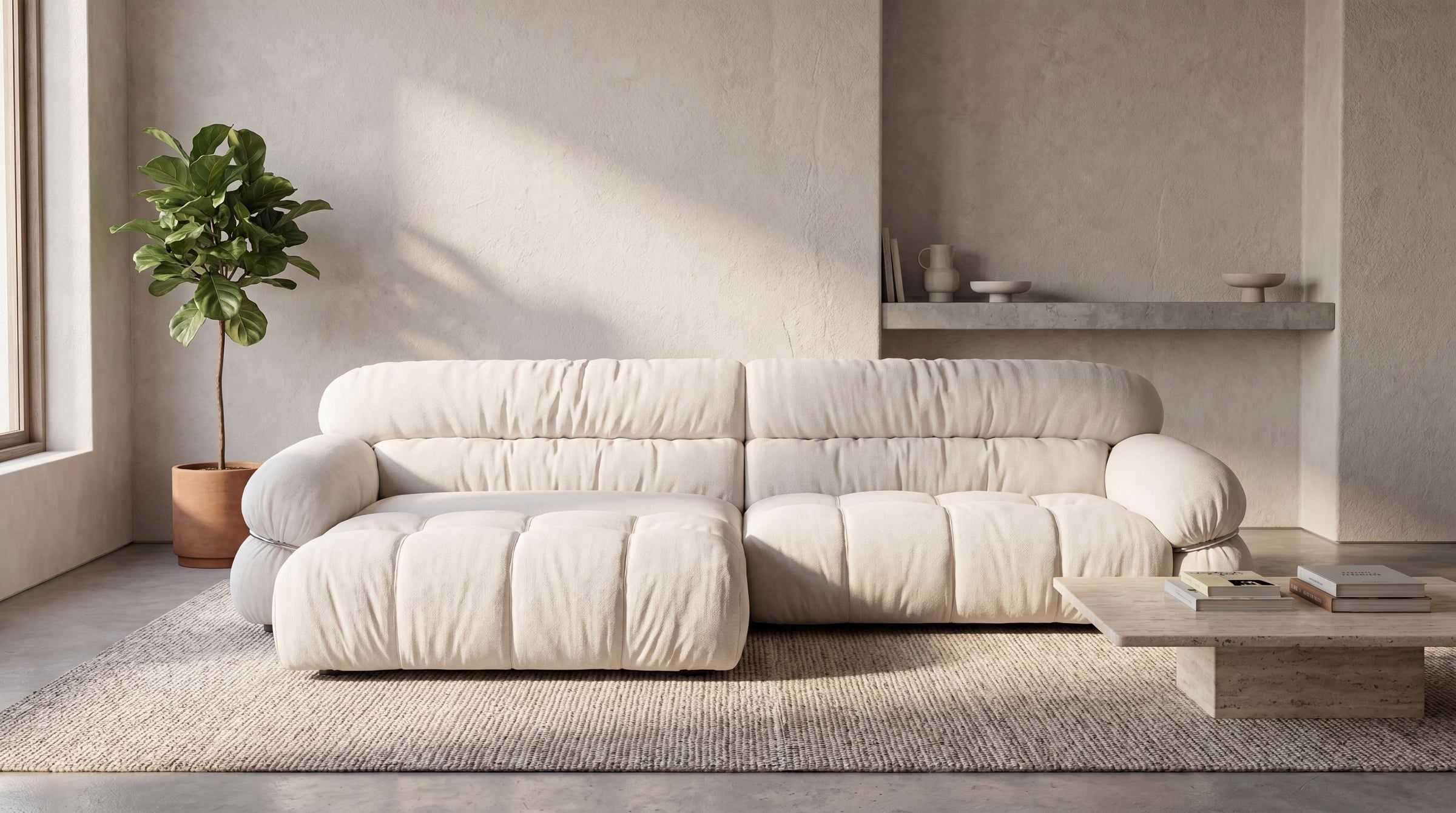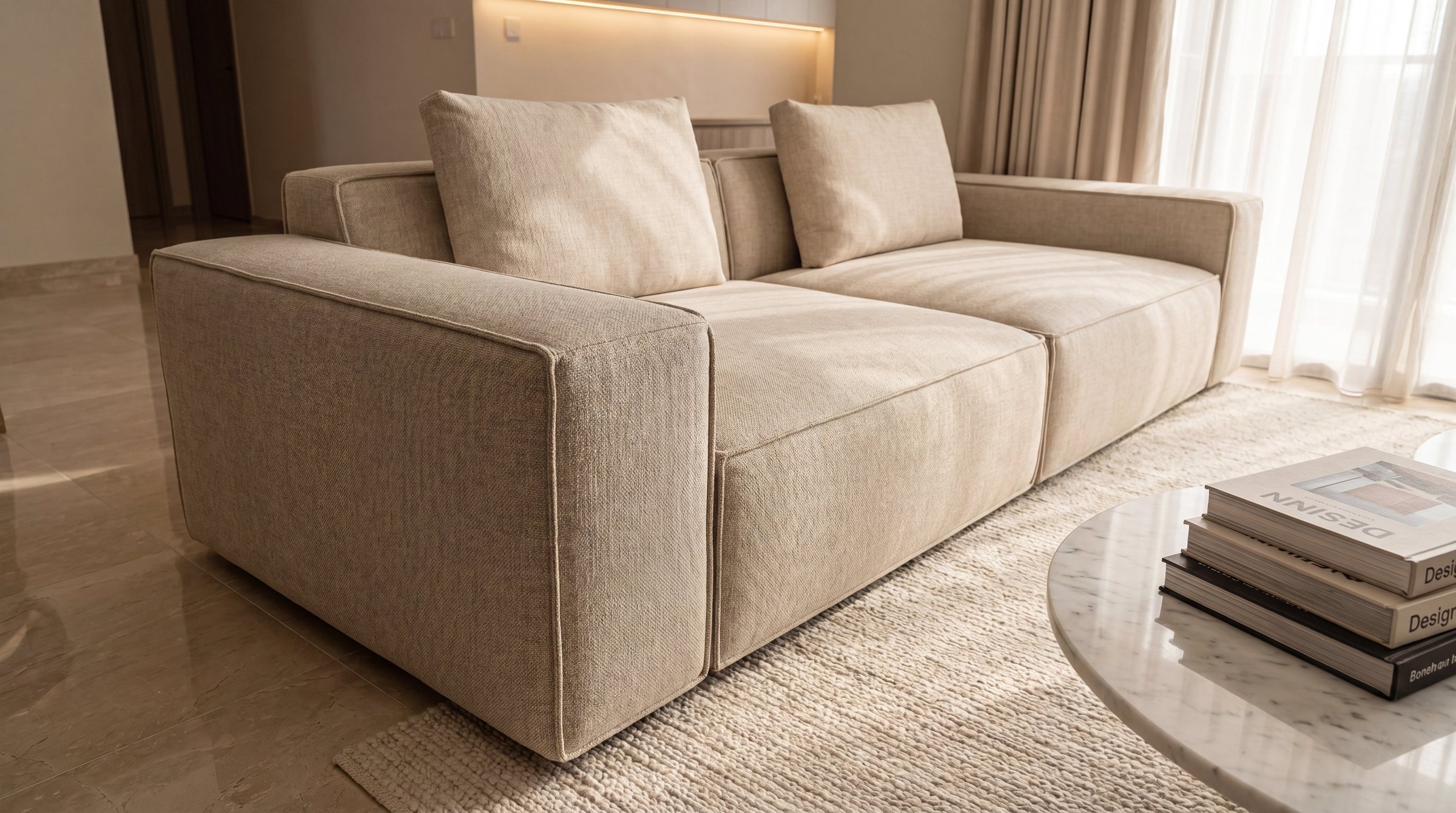
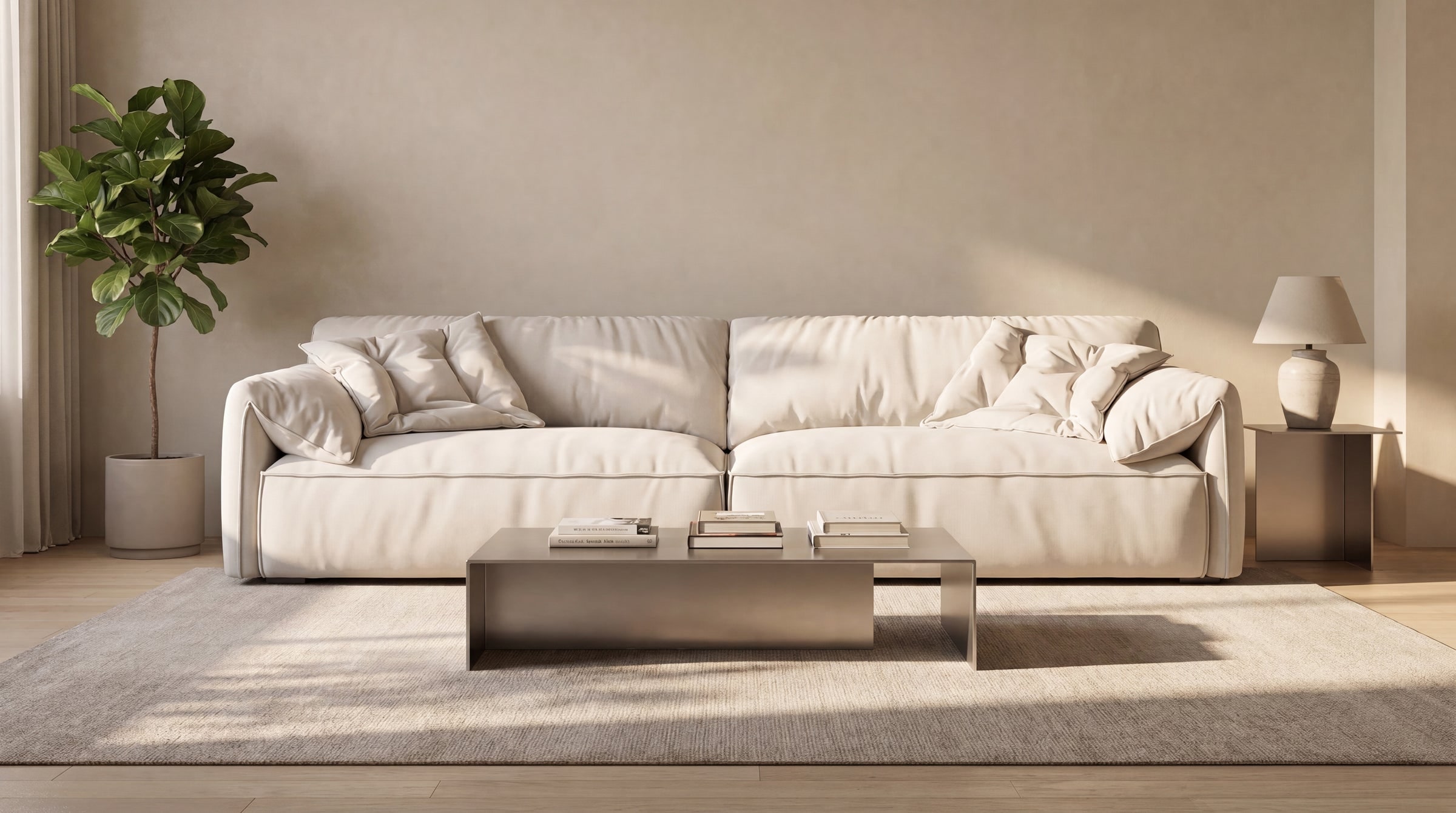
A sofa is the single piece of furniture you'll interact with most in your home. You'll sit on it thousands of times over its lifetime, so the wrong choice is an expensive, daily inconvenience. This guide walks through every decision — dimensions, configuration, upholstery, budget — specifically for Singapore HDB living rooms, where space is the tightest constraint and humidity is the second.
Start with your living room dimensions
Before you look at a single sofa online, measure your room. Wall-to-wall width, depth from the window to the opposite wall, doorway clearances, and the path from the corridor to the living area — all of it. The easiest mistake to avoid is ordering a sofa that physically cannot be delivered through your front door, so check the lift and corridor too.
The second measurement that matters is walkways. Leave 40–60cm between the sofa and the coffee table, depending on how you sit, and roughly 75–90cm for any main walkway past the sofa. Below that, your living room starts feeling like a seat on the MRT at 6pm.
Pick a sofa size that matches your household
Sofas are sold by seat count, but what you really want to match is the number of people who actually sit together at once. Not theoretical guests — real, day-to-day usage.
- Couple, no kids: 2-seater is often enough. A 3-seater gives breathing room for the occasional visitor.
- Young family (2–4): 3-seater is the sweet spot. Kids pile on at first, then drift to the floor anyway.
- Family of 4–5: An L-shape, or a 3-seater plus a lounge chair. An L-shape's chaise gives a second place to stretch out without adding a separate piece.
- Hosts often: Skip the bigger sofa; add an accent chair or two instead (one, in a smaller room). Easier to rearrange, better for conversation.
Choose the right configuration for your layout
Linear 2- and 3-seater sofas work in almost any layout. They push against a wall, they face a TV, they play nicely with a rug. They're also easier to move when you eventually rearrange — and you will rearrange.
L-shape sofas are the right call when you have a clear corner or when your living and dining areas are open-plan. The L shape doubles as a soft room-divider, defining the lounge zone without a physical wall. The trade-off: L-shapes lock your layout. The day you decide to put the TV on a different wall, you're stuck.
Modular sofas — sectionals you can rearrange — give you L-shape flexibility with the ability to reconfigure. Worth the premium if you're likely to move flats within 5 years.
Browse our sofas →Upholstery: what works in Singapore's climate
This deserves its own article — and we wrote one. See our full comparison of fabric vs leather sofas in Singapore. Short version: performance fabrics handle spills and humidity well and feel cooler in non-aircon rooms; real leather wipes clean and ages beautifully but can feel sticky without constant aircon. Avoid bonded leather — it tends to peel within a few years here.
If you have kids or pets, lean performance fabric with a removable, washable cover. If your aircon runs most of the day and your household is mostly adults, leather is a long-term winner.
Budget brackets and what to expect
Singapore sofa prices span a huge range (we break down what a sofa costs in Singapore separately). Here's what each bracket typically gets you. Treat the lifespans as rough guides, not promises:
- Entry-level: Chipboard or pine frame, foam cushions, polyester upholstery. Cushions often sag within a couple of years, and many last only 3–5 years in total.
- Mid-range: Solid wood or plywood frame, pocket-spring seat base, performance fabric or corrected-grain leather. Often 7–10 years with reasonable care.
- Premium: Kiln-dried hardwood frame, eight-way hand-tied springs, down-wrapped cushions, full-grain leather or top-tier performance fabric. Can last 15 years or more if it's kept out of direct sun.
A low-cost sofa replaced twice in a decade can cost more — both in cash and in landfill — than a well-built one that lasts. The maths rarely favours the lowest price.
Red flags to avoid
- "Kiln-dried" claims with nothing behind them. Ask what the frame timber is and how it was dried.
- "Leather-look" or "PU leather" on a sofa: This is a plastic coating on fabric, not leather. On a seat that's used every day, it tends to crack and peel within a few years in Singapore's humidity.
- Low-density seat foam. Soft, low-density foam can flatten for good within a year or two. Look for high-density foam (around 45kg/m³ or more, often labelled "45D") or pocket springs under the foam.
- A vague warranty. Ask what it actually covers, and for how long. A broken frame, failed springs or a seam that splits under normal use are manufacturing defects and should be covered; everyday wear such as pilling or sun-fading usually isn't, wherever you buy.
Bringing it together
Measure your room before you shop. Pick a size that matches how your family actually sits, not how you imagine you'll host. Choose fabric if practicality wins; leather if aesthetics and aircon do. Budget for the sofa you'll still own in 2035, not the lowest-priced one you can buy in 2026.
If you want a starting point, browse our sofa collection — from compact 2-seaters to roomy L-shapes, with the real dimensions of every size on each product page.
Browse our sofas →