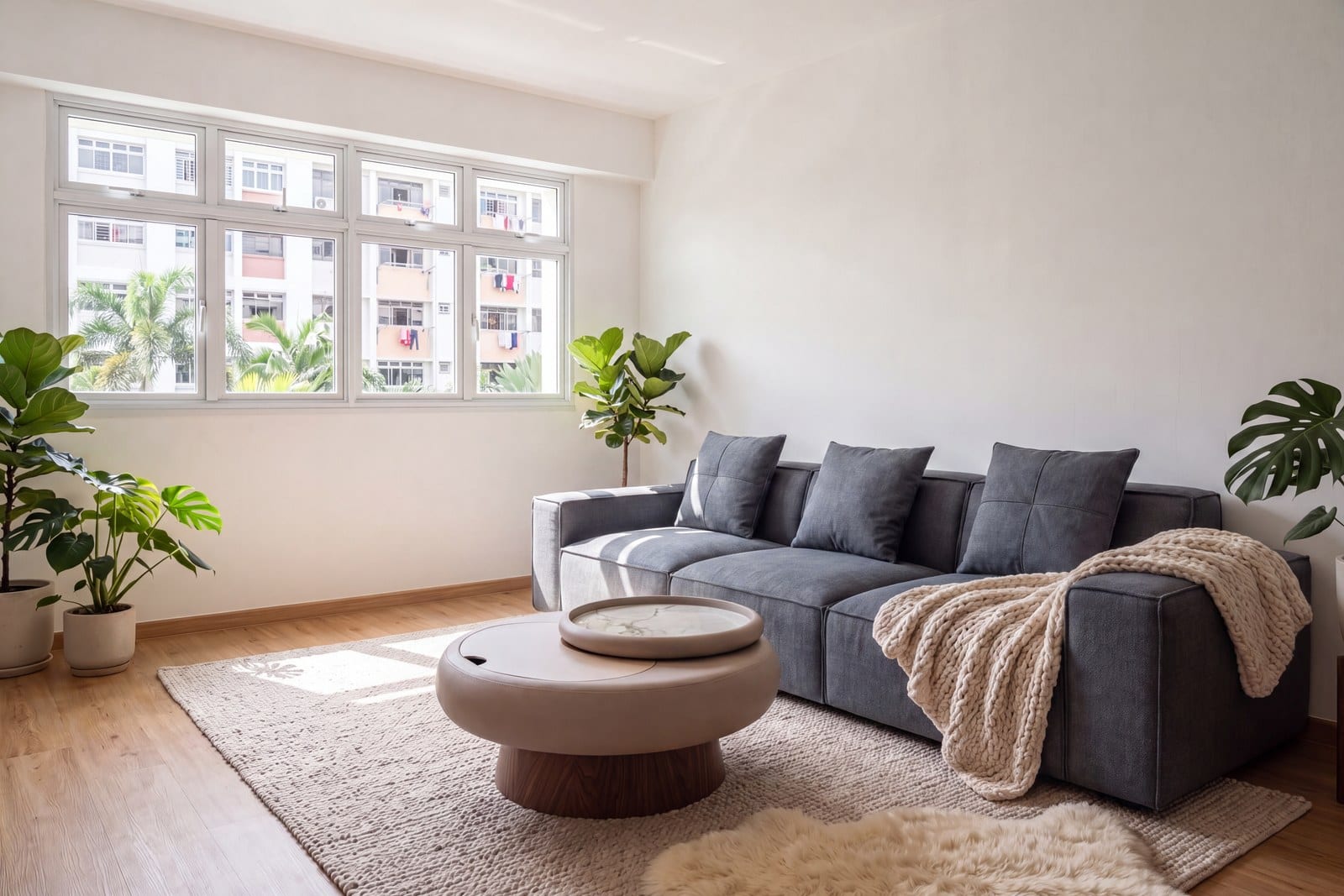
Making a small HDB feel spacious isn't about buying tiny furniture — compact pieces often look stranded in the middle of a room. It's about picking pieces that do more work per square metre, or that change the eye's perception of the room. Here are ten moves we recommend most often.
1. Pick a sofa with exposed legs
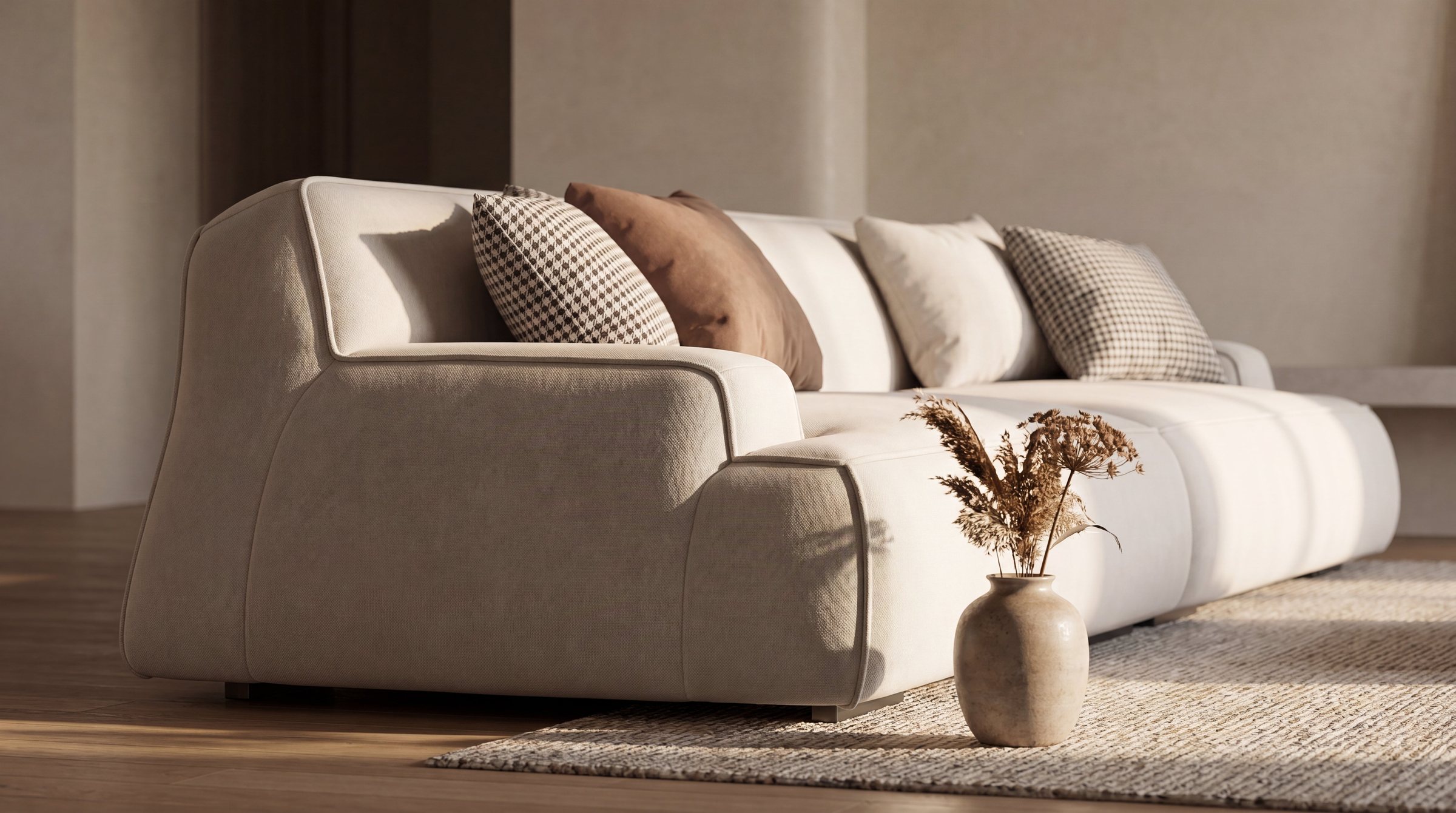
Sofas that sit flush to the floor look heavier and visually crowd the room. A sofa raised on legs, even 10–15cm of them, lets the eye see floor beneath it — the room reads as larger. Same sofa footprint, very different visual weight.
Browse our sofas →2. Choose an extension dining table
Your daily table and your guest table don't need to be the same size. A 140cm table that extends to 200cm is a 6-seater that lives as a 4-seater most of the year. Ideal for HDB dining zones that are tight on space but host occasionally.
Browse our dining tables →3. Go for a storage bed frame
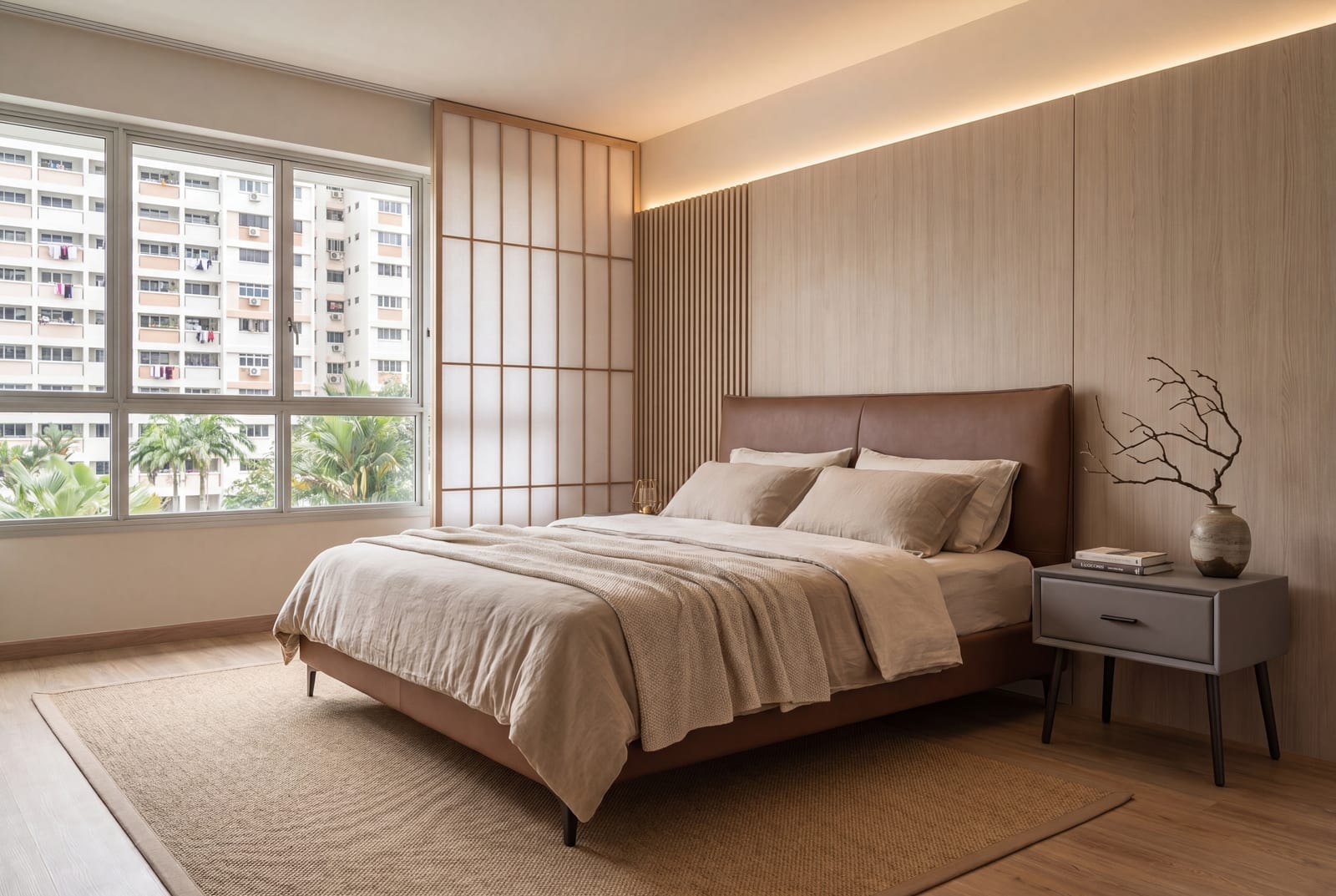
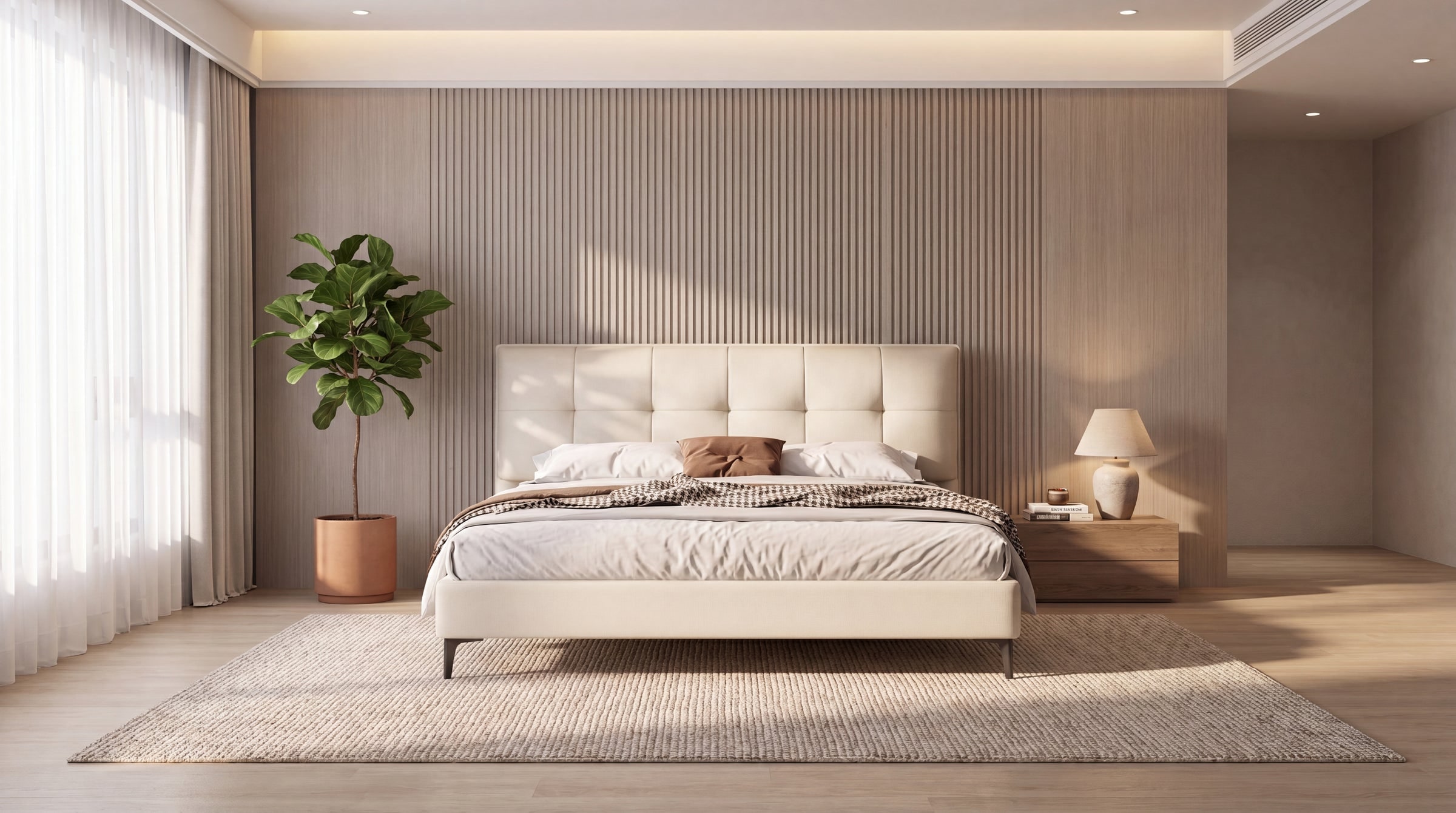
The space under a bed is dead space unless you use it. Storage beds — either with side drawers or a hydraulic lift-up base — reclaim a lot of space for bedding, luggage, or seasonal items: under a queen, often half a cubic metre or more. In HDB flats where storage is perpetually scarce, it's one of the most useful bedroom upgrades. Some of our bed frames offer an under-bed storage lift as an add-on, and our guide to hydraulic vs drawer storage beds covers the trade-offs.
Browse our bed frames →4. Use a narrow-depth media console
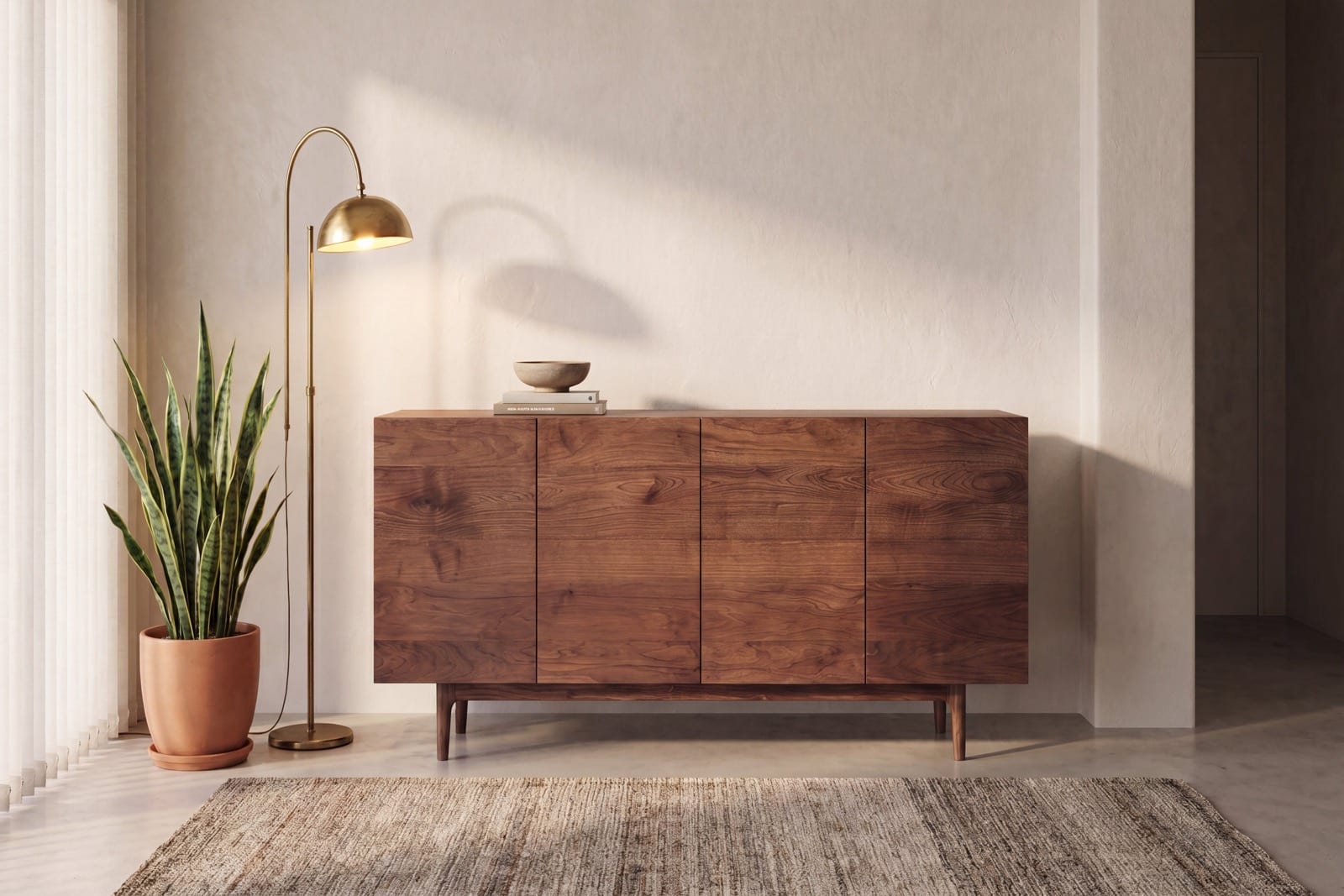
Standard TV consoles are 40–50cm deep. A narrow console at 30–35cm gives you back 10–15cm of walkway in front of your sofa — in a tight living room, that's the difference between cramped and comfortable. Ours are around 40cm deep, the slim end of standard rather than truly narrow.
Browse our TV consoles →5. Replace nightstands with wall-mounted shelves
A nightstand takes 40 × 40cm of floor space. A wall-mounted shelf at the same height does the same job and gives you the floor back. Bonus: easier to vacuum under. Works best in smaller bedrooms where the bedside table is purely functional.
6. Pick nesting coffee/side tables
A nesting pair takes up the footprint of one table day to day, then gives you a second surface when you need it — often a better fit for a small living room than one large coffee table. More flexible, less imposing.
Browse our side tables →7. Use vertical storage: tall, narrow bookshelves
Storage capacity = width × height × depth. A tall narrow bookshelf (180cm tall × 60cm wide × 30cm deep) stores as much as a low one twice as wide, but takes half the floor. Anchor it to the wall. The eye also tracks upward, which makes ceilings feel higher.
8. Skip bulky armchairs; use a single lounge chair
A pair of armchairs is lovely in a big living room. In a small one, they compete with the sofa for visual dominance and eat floor space. Pick a single, good lounge chair instead — often lower profile, always more distinctive.
Browse our lounge chairs →9. Hang curtains high, not window-height
Not furniture, but too good to skip. Mount curtain rods 15–20cm above the window frame, or as close to the ceiling as you can, and let the curtains fall to the floor. The eye reads the full height as window, and ceilings feel taller. It's one of the least expensive tricks in the small-space playbook.
10. Mirrors that work (not gimmicky)
Mirrors can make a room feel noticeably bigger — but only when placed deliberately. Put one opposite a window so it reflects outdoor light. Put one on a wall at the end of a hallway so the hallway reads as continuing. Don't put them on every wall — at that point the effect flips and the space feels disorienting.