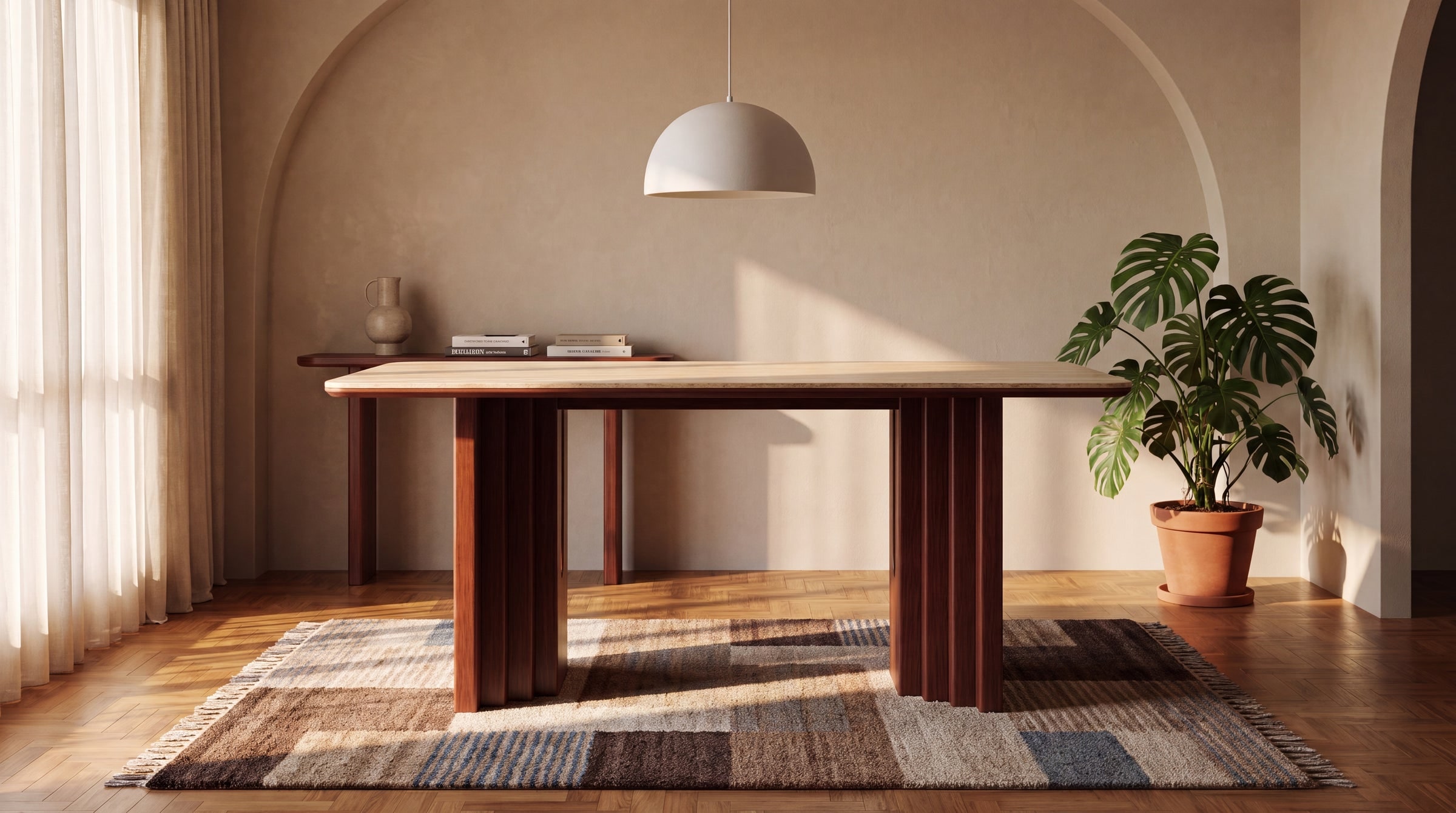
A dining table is one of the hardest pieces to size correctly. Too small and you're elbow-to-elbow at every meal. Too big and the room feels cramped and your kitchen walkway disappears. Here's how to get it right the first time.
The two numbers you actually need
First, the table's own dimensions. Second — and this is the one people forget — the clearance around it. You need enough room to pull out a chair, sit down, and stand up without hitting the wall behind you. Allow roughly 75cm at the very least, and about 90cm if people need to walk behind seated diners.
Which means: a 160cm table in a 260cm-wide room doesn't fit, even though the maths looks like it should. The table fits; the chairs don't.
Seat count by table length
- 80cm: 2 people, barely — best as a breakfast nook for one person or a couple with no guests
- 120cm: 4 people, tight; 2 people comfortably
- 140–150cm: 4 people comfortably; 6 in a pinch
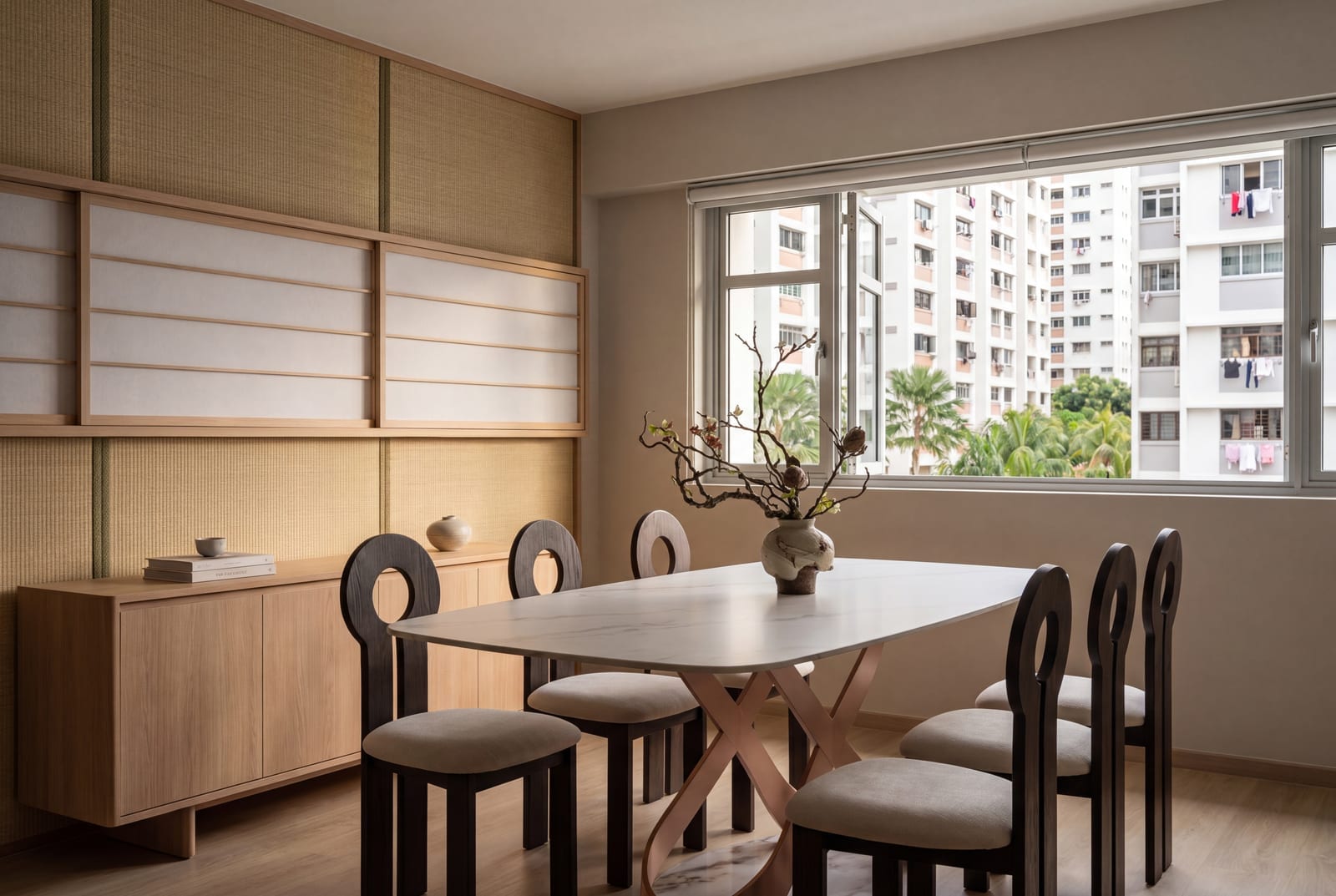
- 160–180cm: 6 people comfortably — the sweet spot for many 4-room flats
- 200cm+: 8 people; requires an open-plan dining area or a dedicated dining room
Width matters too. Most dining tables are 80–90cm wide, which is fine for everyday meals. At 90–100cm there's room down the middle for shared dishes without moving plates — handy if your family eats with everything in the centre of the table.
Clearance rules
Measure your dining zone carefully, because they vary a lot between flats. Say yours is about 3m × 2.7m. Keep about 90cm behind the chairs on both long sides and the table can be at most about 90cm wide; leave 60–75cm at each end and it tops out at around 150–180cm long — a 6-seater at the upper end. Push to 200cm and you've lost the walkway.
Shape: rectangular, round, or oval
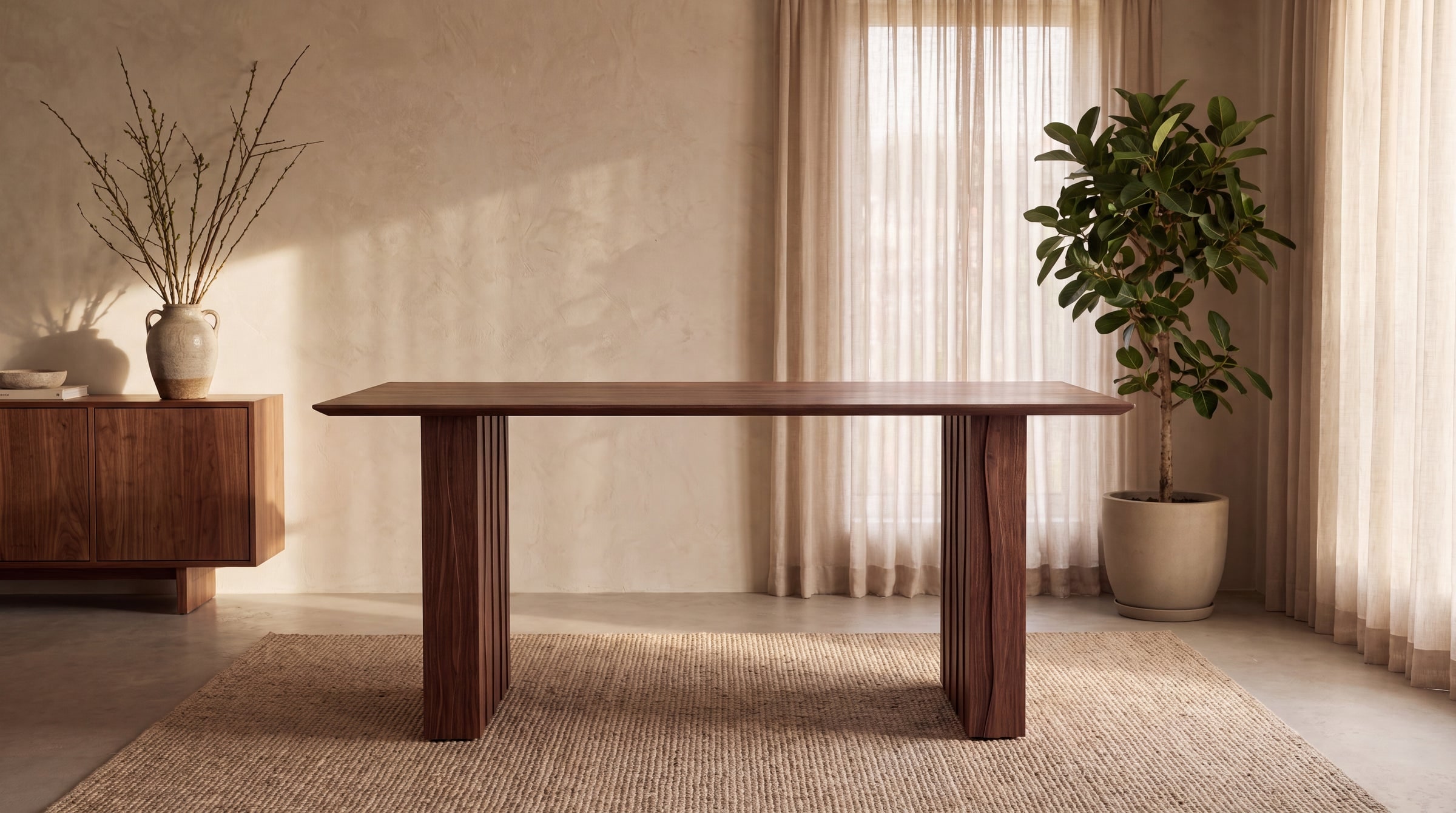
Rectangular tables are the most space-efficient. Every cm of length gives you seating; the shape fits against walls without waste. They're the default for a reason.
Round tables are more social — no head-of-table hierarchy, everyone can see everyone. But they can't sit against a wall, so they need clearance all the way round: a 100–120cm round table needs a clear square of roughly 2.6–2.9m once you allow 80–90cm on every side for chairs. They shine when you usually seat four and want better conversation.
Oval tables are a compromise — the seating efficiency of a rectangle with the softer edges of a round. They work well in open-plan spaces where the table is visible from multiple angles.
Extension tables
Extension dining tables add length when you have guests, usually with a leaf that slots into the middle or folds out from inside. They're genuinely useful in HDB homes: a 140cm daily table that extends to 200cm for family gatherings saves you the cost and footprint of a dedicated "guest" table.
The caveat: the extension mechanism is usually the part that wears first. Before you buy, check that it runs smoothly, locks firmly, and that the leaf sits flush when it's open. A few of the dining tables in our range extend; look for it in the product details.
Browse our dining tables →Special case: open-plan kitchens
Newer HDB and condo layouts often fuse the kitchen and dining area. In an open-plan space, the dining table does double duty as a room divider — it defines where the kitchen ends and the living begins. Size it for the space you want to define, not just the number of seats.
A 180cm rectangular table perpendicular to the kitchen counter creates a natural boundary without needing walls. A round table in the same position feels like a separate zone.