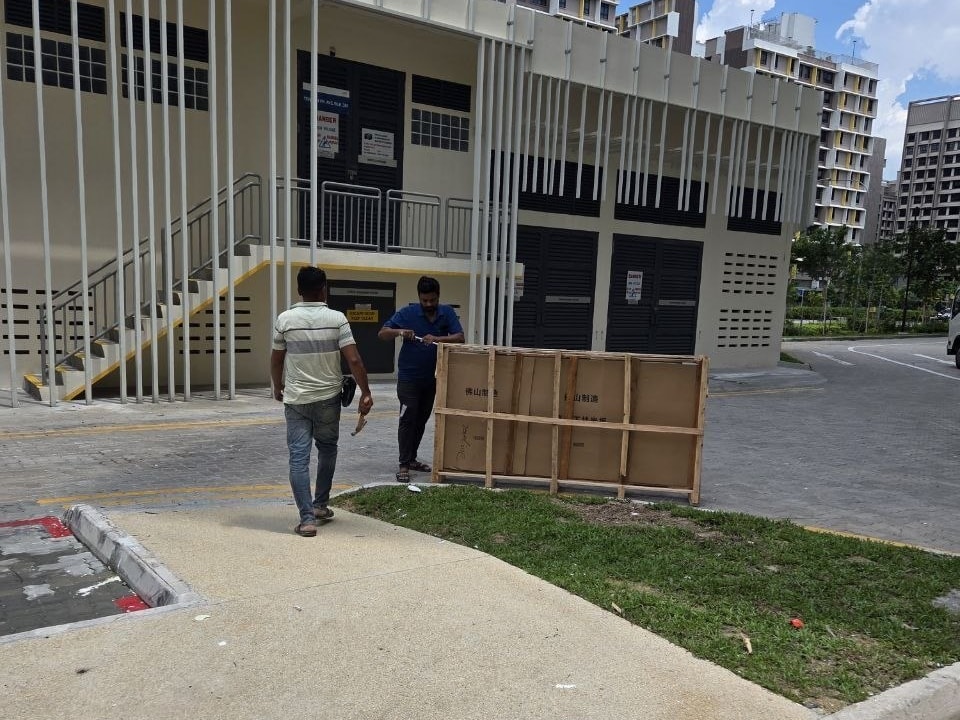
A sofa that fits your living room perfectly can still fail at the lift door. Here is exactly what to measure in your new HDB block, how to measure it, and what to ask a furniture seller before you pay a deposit.
Every week in Singapore, a sofa that was measured against the living room wall gets stuck somewhere between the lorry and the flat. Not because it was too big for the home — because nobody measured the route into the home.
The route is the constraint. A 3-seater is delivered as one wrapped carton, and that carton has to survive a lift lobby, a lift car, a corridor, a turn, and a door frame before it ever reaches the spot you planned for it. Any one of those can be the bottleneck, and you only find out on delivery day, with two movers waiting and a lorry double-parked downstairs.
The fix takes five minutes and costs nothing. Here it is.
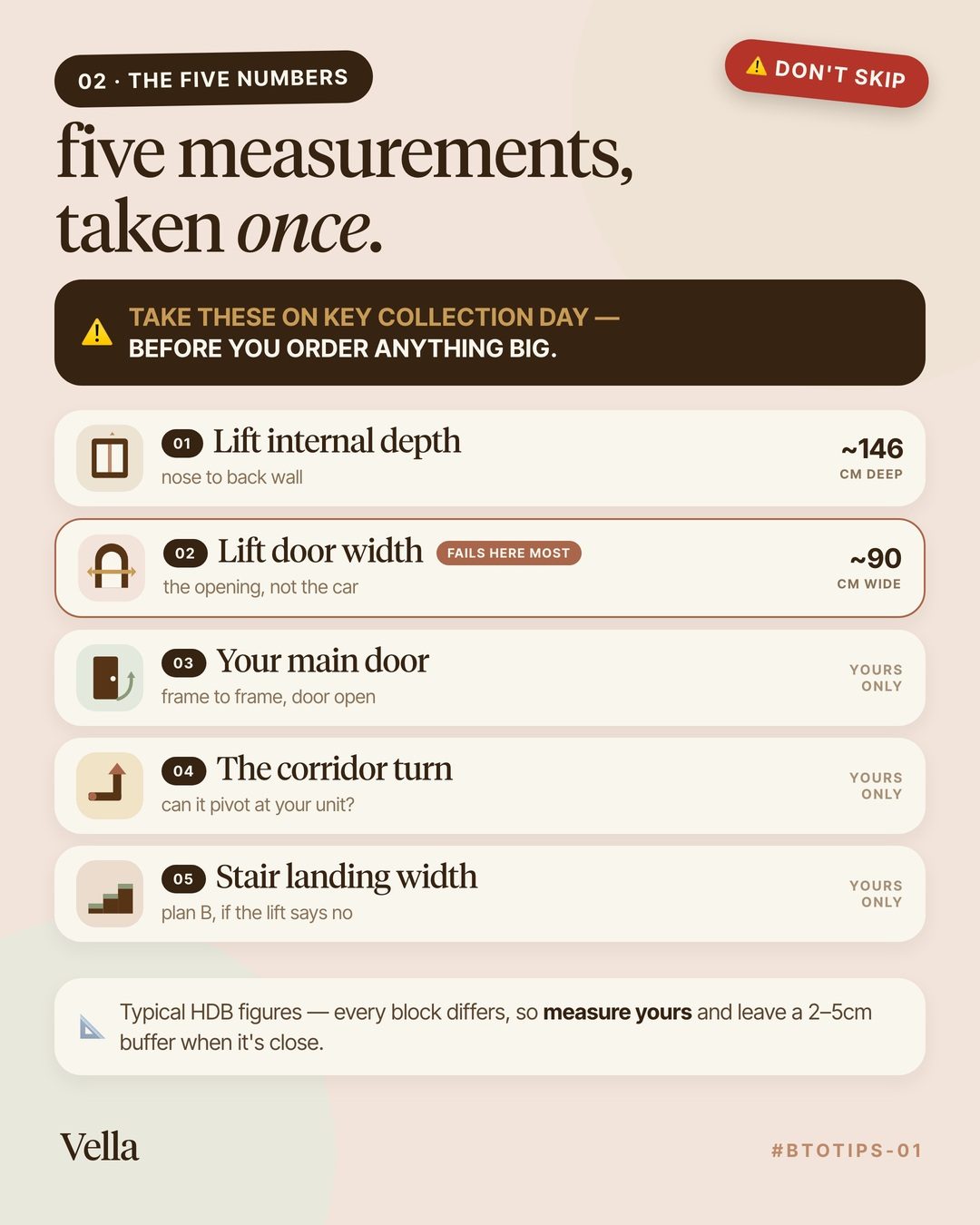
Five numbers, taken once
Take these on key collection day, write them in your phone notes, and quote them to every furniture seller you talk to.
- Lift internal depth — door opening to the back wall of the car
- Lift door width — the clear opening, not the width of the car
- Your main door — frame to frame with the door fully open
- The corridor turn — corridor width at your unit, where a long item has to pivot
- Stair landing width — your plan B, and the number that decides the carry fee
Why furniture gets stuck
The dimensions you read are assembled dimensions
Product pages list the size of the finished piece sitting in your home. What arrives at your block is that piece wrapped in protective film, foam corners and cardboard — bigger in every direction, heavier, and unable to flex. A bare sofa frame can be tilted onto its back and walked through a tight door. A wrapped carton often cannot, because the movers can't see the corners and won't risk the fabric.
The gap between the two numbers is usually a few centimetres per side. A few centimetres is exactly the margin that decides whether something goes in.
HDB blocks are not standardised the way people assume
Different blocks, different vintages, different lift models. A service lift in one block is a noticeably different box from the one two streets away, and some blocks have a passenger lift that is smaller again. There is no single number you can look up and trust for your flat — which is precisely why the five measurements are yours to take, not something to google.
The turn is harder than the doorway
People measure the door and forget the approach to it. A 2.2 metre sofa can pass through a 1 metre opening at an angle, but only if there is room on both sides to swing it. In a narrow common corridor with a wall directly opposite your unit, that swing doesn't exist. This is the failure that surprises people most.
The five measurements, in detail
01 · Lift internal depth — nose to back wall
Stand in the lift with the doors open and measure from the plane of the door opening straight back to the rear wall. This is the number that decides whether a long item can stand inside the car at all.
- Measure to the wall, not to a handrail or a protective blanket hook — those steal a few centimetres and movers have to work around them.
- If your block has both a service lift and passenger lifts, measure the service lift and note which lift it is. They differ.
- Diagonal helps: an item longer than the depth can sometimes stand corner to corner, but only if the seller says the carton may be tilted. Ask; don't assume.
02 · Lift door width — the opening, not the car
Lift doors are almost always narrower than the car behind them. Measure the clear opening between the door edges when they are fully retracted — this is the true gate, and it is the single most common point of failure.
- Take the measurement at chest height, where the opening is unobstructed.
- Photograph the lift's capacity plate while you're in there. It records the load limit, and having the photo saves an argument later.
- Note the ceiling height too if you are buying anything tall — a wardrobe or a full-height shelf unit sometimes fails on height, not width.
03 · Your main door — frame to frame, door fully open
Open your main door as far as it goes and measure between the frame on one side and the face of the open door leaf on the other. That door leaf is thick, and it eats into the opening — measuring the frame alone will flatter you by several centimetres.
- Measure the gate as well if you have one, and check whether it folds flat against the wall.
- Check whether the door can be lifted off its hinges. Many can, and a mover who knows that in advance can plan for it. Tell your seller if it can't.
- Measure bedroom doors too if the piece is going into a bedroom. People forget the second door.
04 · The corridor turn — can it pivot outside your unit?
Stand at your door and measure the corridor width straight across to the wall, railing or opposite unit. This is the space a long item has to rotate in to go from travelling along the corridor to going through your door.
- Rough guide: if the item's longest dimension is greater than the corridor width, it will have to be angled through, and the person carrying the back end needs room to swing.
- Note anything fixed in the way — a riser cupboard, a bin chute, a low ceiling beam, a sharp turn out of the lift lobby.
- A photo of the corridor from the lift to your door is worth more to a seller than the number alone. Take one.
05 · Stair landing width — plan B, and what it costs
If the lift says no, the stairwell is the only other way up. Measure the landing — the flat area where the stairs turn — because that is where a long item has to pivot, and it is always tighter than the flight itself.
- Carry charges for stairs are commonly billed per floor and per item, on top of the delivery fee. Ask for the rate in writing before you agree.
- Stair carries are where scuffs happen. If your piece is pale fabric or an open-pore timber, this is worth avoiding rather than budgeting for.
- Count the floors. Knowing you're on the 11th changes the conversation and the quote.
How to measure so the numbers are actually useful
- Use a tape, not a laser, inside the lift. Laser measures get confused by reflective stainless steel panels. A 5 metre tape and a second pair of hands is more reliable.
- Measure twice, at two heights. Skirtings, kick rails and door stoppers narrow an opening near the floor.
- Round down, never up. If it reads 98.5cm, write 98. You want your margin on the safe side.
- Write centimetres and label every number. "Lift door 96" is useful six weeks later. "96" is not.
- Photograph everything you measure. Lift interior, corridor, your door, the stairwell landing. A seller can assess a photo instantly; a number needs interpretation.
Reading a product page properly
Once you have your five numbers, the comparison is not against the listed dimensions alone. Three questions turn a listing into something you can actually check.
What is the packed carton size?
This is the number that has to clear your lift door, not the assembled width. Any seller who builds or imports their own furniture can tell you. A seller who can't is guessing on your behalf.
Does it come in sections?
A modular or knock-down piece travels as several smaller cartons and is assembled in the room. This is the single biggest advantage in a tight block, and it is worth choosing a design for. A fixed-frame 3-seater is one object with one chance of fitting; a sofa with a detachable chaise and bolt-on legs has several.
Who pays if it doesn't go in?
Ask before you pay, not on delivery morning. Find out whether a failed delivery means a stair-carry surcharge, a redelivery fee, a restocking charge, or a refund — and get the answer in writing in the chat thread. This one question tells you a great deal about who you are buying from.
Vella dimensions, on the page
Because this problem is entirely avoidable with information, we publish the width of every piece where you can see it before you start a conversation with us. Check these against your five numbers.
| Piece | Type | Width |
|---|---|---|
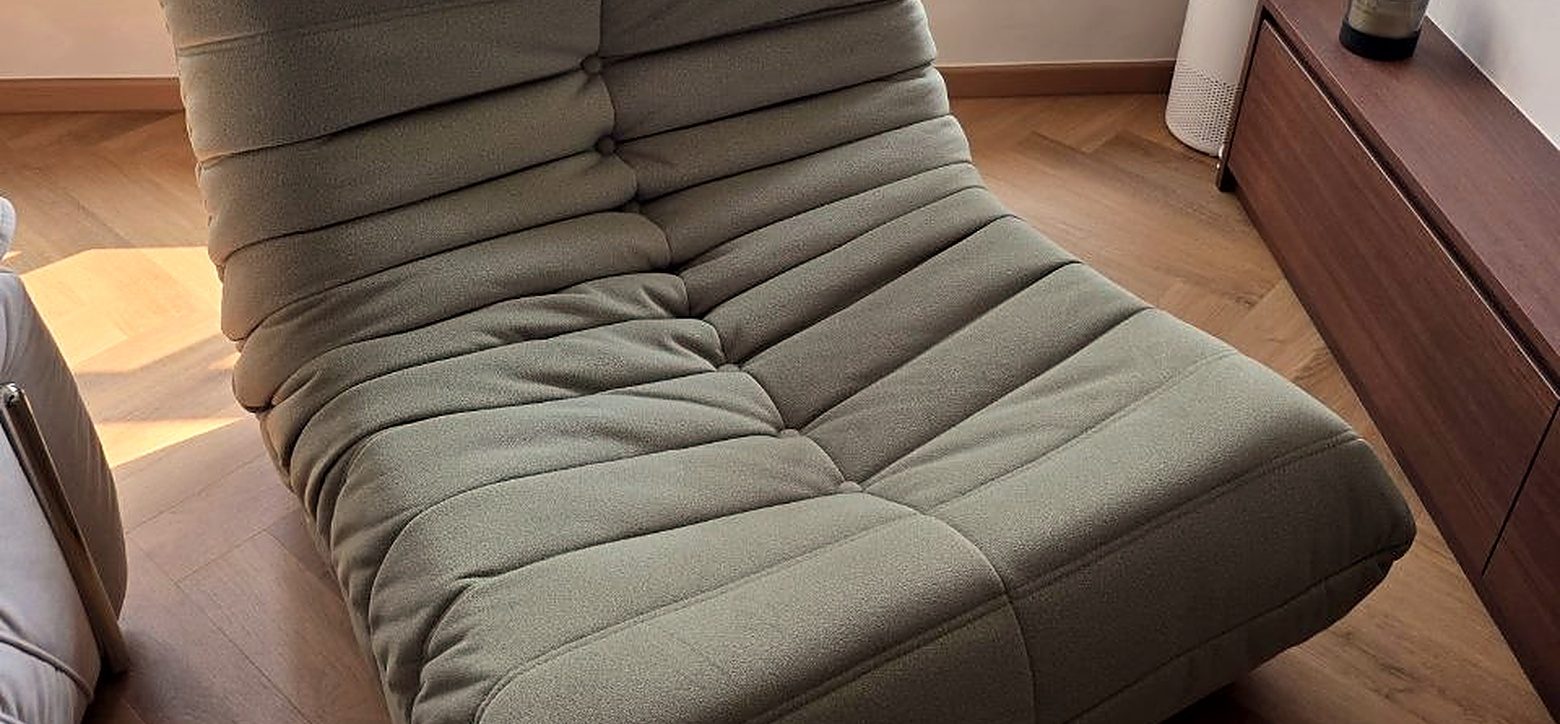
| Rosae | Lounge chair · 6 colourways | 87 cm |
| Nelin | Lounge chair · 6 colourways | 89 cm |
| Pullo | 2-seater sofa · larger sizes available | 170 cm |
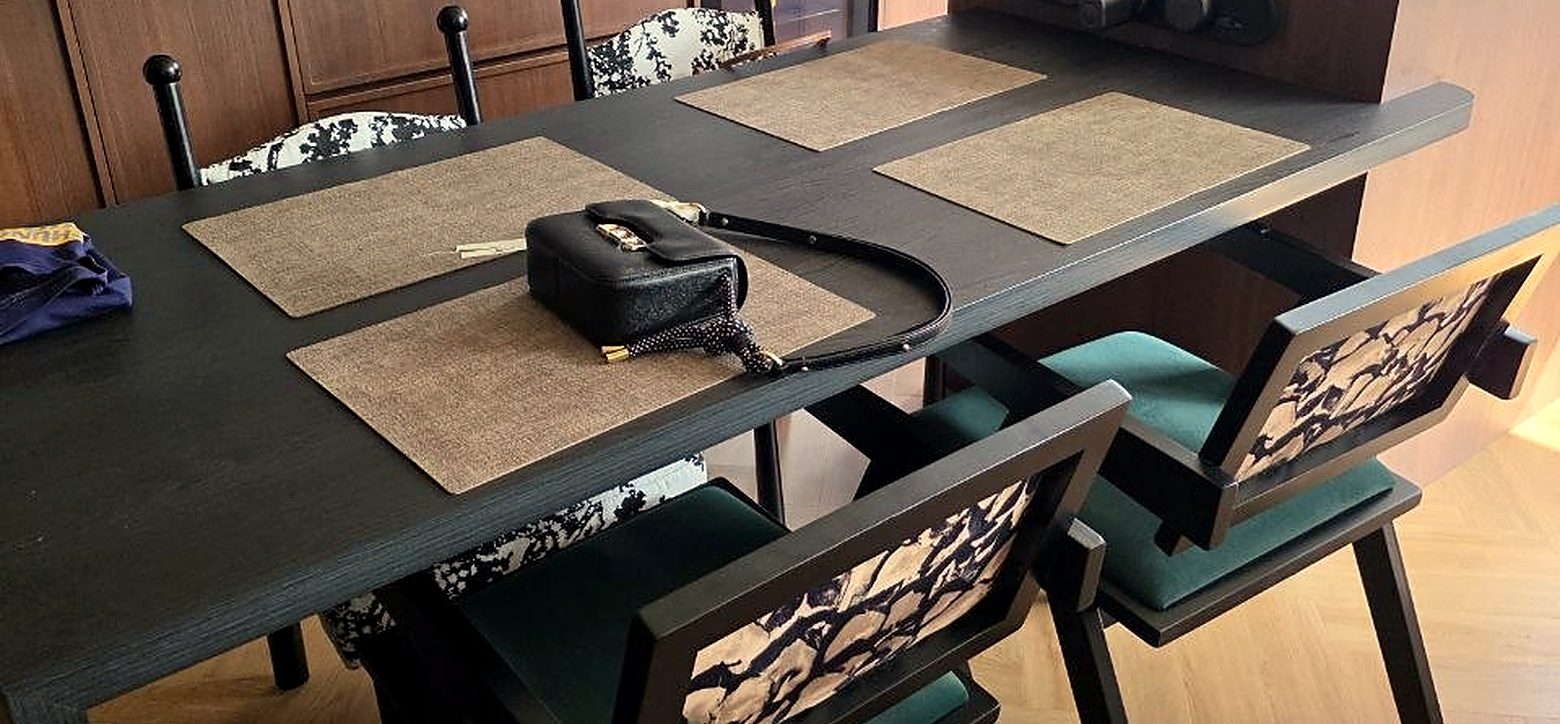
| Semia | Dining table · extendable | 140–200 cm |
When to take the measurements, and when to order
Built-to-order furniture in Singapore commonly runs six to twelve weeks from order to doorstep. Ours is 30–35 business days, built after you order rather than pulled from a warehouse.
The practical consequence: if you start shopping the week your renovation finishes, you will be living on the floor for the better part of two months. The sequence that works is to take your five measurements on key collection day, shortlist during renovation, and place orders around the time carpentry starts — giving the seller a delivery window rather than a fixed date, since renovations move.
Frequently asked
- What if my sofa doesn't fit in the lift?
- The usual options are a stairwell carry (billed per floor, and the most common outcome), disassembly where the design allows it, or returning the piece under whatever the seller's policy says. Hoisting through a window is not a routine option in HDB blocks — treat it as a last resort to discuss with the seller and the relevant authorities, not a plan.
- Are HDB lift sizes standard across blocks?
- No. Lift models vary by block, by vintage and by lift type within the same block. Measure the specific lift you will actually use, and note whether it is the service lift or a passenger lift.
- Should I measure before or after renovation?
- Before — on key collection day. The lift, corridor and main door don't change during a renovation, and taking the numbers early means you can shop with confidence instead of retrofitting your choices at the end.
- Does a modular sofa really make that much difference?
- Yes. Each section is a separate carton, so the constraint becomes the largest single module rather than the full assembled length. In a tight block it is often the difference between a normal delivery and a stair carry.
- What should I send a seller when I ask if something will fit?
- Your five numbers in centimetres, plus photos of the lift interior, the corridor outside your unit and your main door open. That is enough for anyone competent to give you a straight answer.
- How long before my move-in should I order furniture?
- Work back from your handover date using the seller's lead time and add a buffer. For built-to-order pieces on a 30–35 business day lead time, placing the order around the start of carpentry usually lands delivery close to the week you move in.