If you share your flat with a cat, you've probably caught it sizing up the sofa. Start with the bad news: no upholstery is truly cat-proof, and a determined cat can mark almost anything. What you can do is pick a fabric that gives claws less to grab, hides fur and cleans easily, then give your cat somewhere better to scratch.
Why cats scratch the sofa
Scratching isn't bad behaviour. Cats scratch to keep their claws in shape, to stretch, and to leave their scent on places that matter to them. The sofa is where you spend your evenings, which makes it prime territory. What works is a pair of things: a fabric that resists snagging, and a scratching spot your cat likes more than the sofa.
What to look for in a cat-friendly fabric
With claws, how a fabric is made matters more than the fibre name on the label. If you can, run a fingernail across a swatch and see what happens.
- A tight, flat weave. Densely woven fabrics with a smooth surface give claws little to hook into. If your nail glides off, that's a good sign.
- No loops. Raised loops on the surface are easy for a claw to catch and pull.
- A short pile, or none. A low, dense pile has nothing loose to snag, though it can show marks.
- A forgiving texture. A subtle fleck or heathered finish hides small pulls and stray fur better than a perfectly smooth, solid colour.
- Easy cleaning. Fur, dander and the odd hairball come with the cat, so look for a fabric that releases hair and can be spot cleaned.
Sofa fabrics compared
Bouclé and other loop weaves
Bouclé is beautiful, and it's everywhere right now, but its nubbly surface is made of small loops of yarn, and loops are exactly what claws catch. Once a loop is pulled it stands proud of the surface, and a few pulls become a visible patch. Loose basket weaves, nubby tweeds and chunky textured fabrics behave much the same way. Some loop fabrics are tighter and tougher than others, but as a rule they're the riskier choice if your cat scratches.
Microfibre and tech fabrics
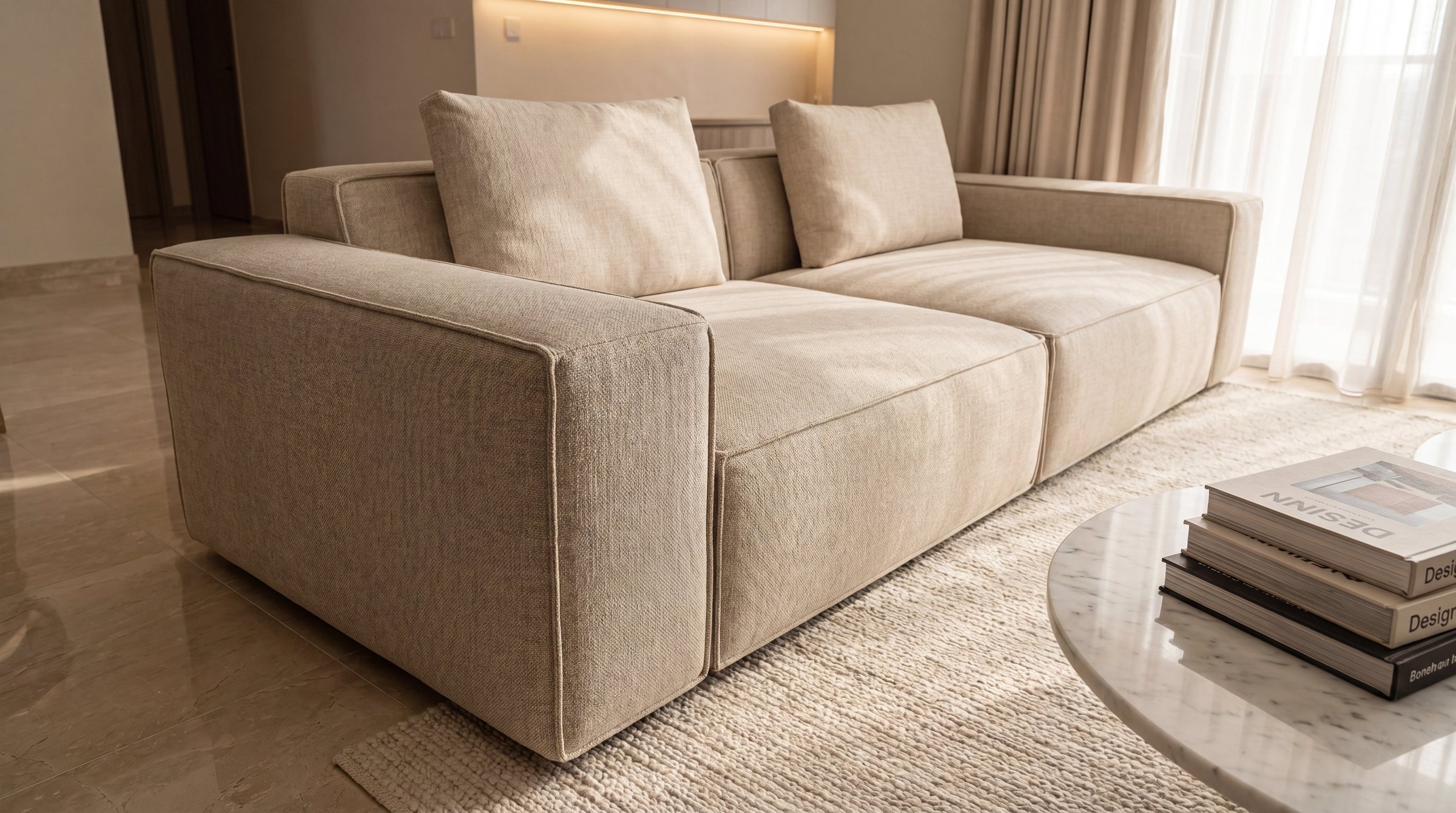
Microfibre and the newer tech fabrics are woven from very fine synthetic fibres packed tightly together. That dense, smooth surface is why pet owners often choose them: claws have less to grab, fur tends to brush or vacuum off, and many are treated to resist water, so a spill sits on the surface for a moment before soaking in. Plenty are sold as scratch-resistant. Read that as a description of the material, not a promise. It means the fabric is made to cope better than most, not that a cat can't mark it.
Velvet
Velvet has a short, dense pile and no loops, which works in its favour: there's no woven texture for claws to hook. The downsides are that the pile can crush or show marks where it's brushed the wrong way, and fur clings to it, so expect to reach for a lint roller more often.
Chenille, linen and cotton
Traditional chenille has a soft, tufted yarn that's lovely to sit on and easy for claws to pull. Loosely woven linen and cotton look relaxed and breathe well in our climate, but an open weave snags easily. A tightly woven cotton or linen blend copes far better than a loose one, so judge the weave, not just the fibre.
Leather
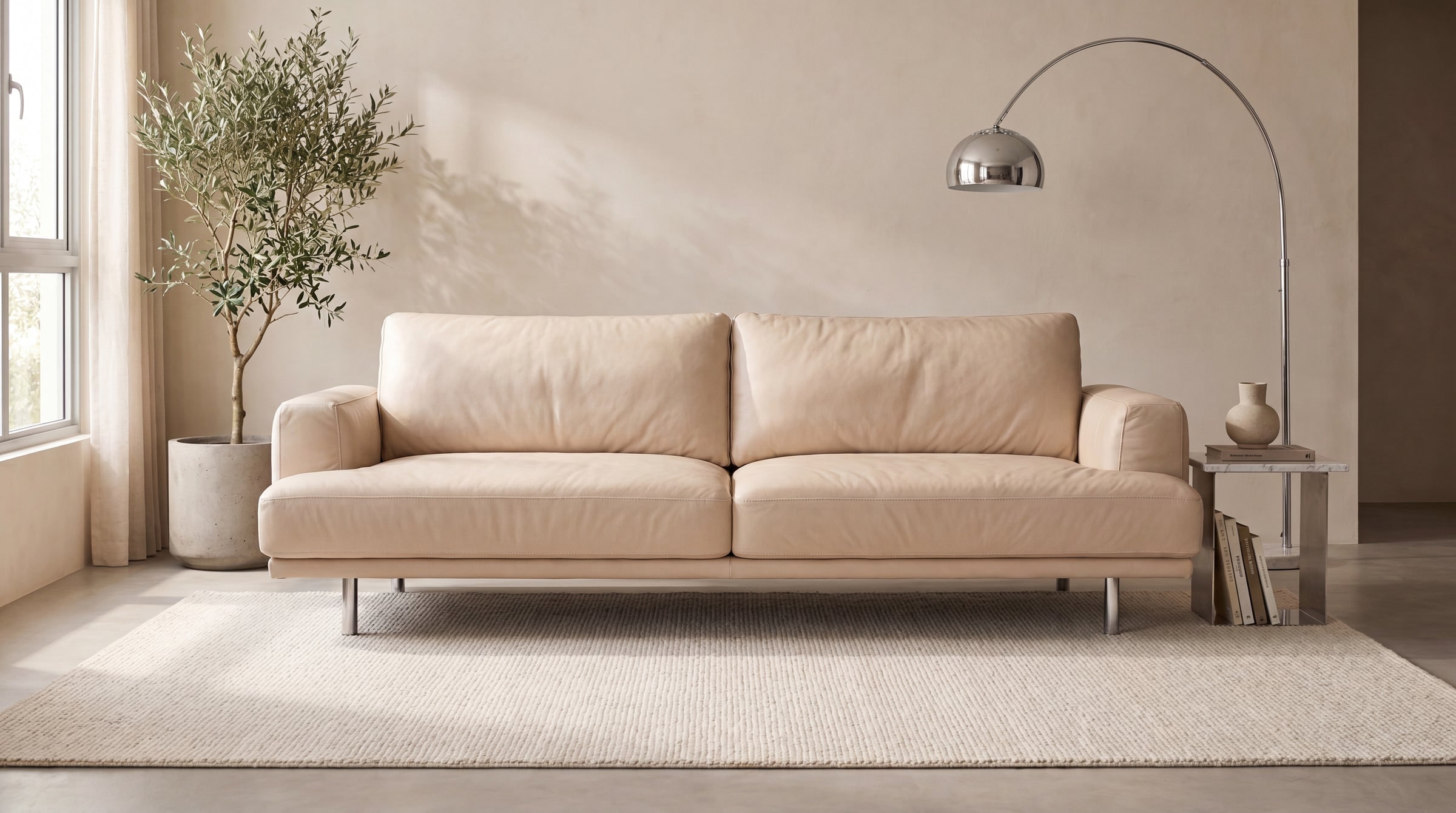
Leather is the one people are most torn about. In its favour, there's no weave for claws to snag, and fur and dander don't cling, so a quick wipe deals with them. Against it, claws leave scratches and punctures, and on leather they show. Some owners come to see light marks as part of the patina leather develops over the years; others notice every one. If you're leaning towards leather, our fabric vs leather guide covers how each copes with Singapore's climate.
| Material | Claws | Fur | Worth knowing |
|---|---|---|---|
| Bouclé and loop weaves | Loops catch and pull | Nestles into the texture | The riskiest choice with a scratcher |
| Microfibre and tech fabrics | Dense, smooth surface gives less grip | Brushes or vacuums off | "Scratch-resistant" is a label, not a guarantee |
| Velvet | No loops to hook | Clings; keep a lint roller handy | The pile can show marks |
| Chenille, loose linen or cotton | Soft or open weaves snag | Varies | Tighter weaves cope better |
| Leather | No snagging, but scratches show | Wipes off | Some call the marks patina; others notice every one |
Colour, fur and everyday cleaning
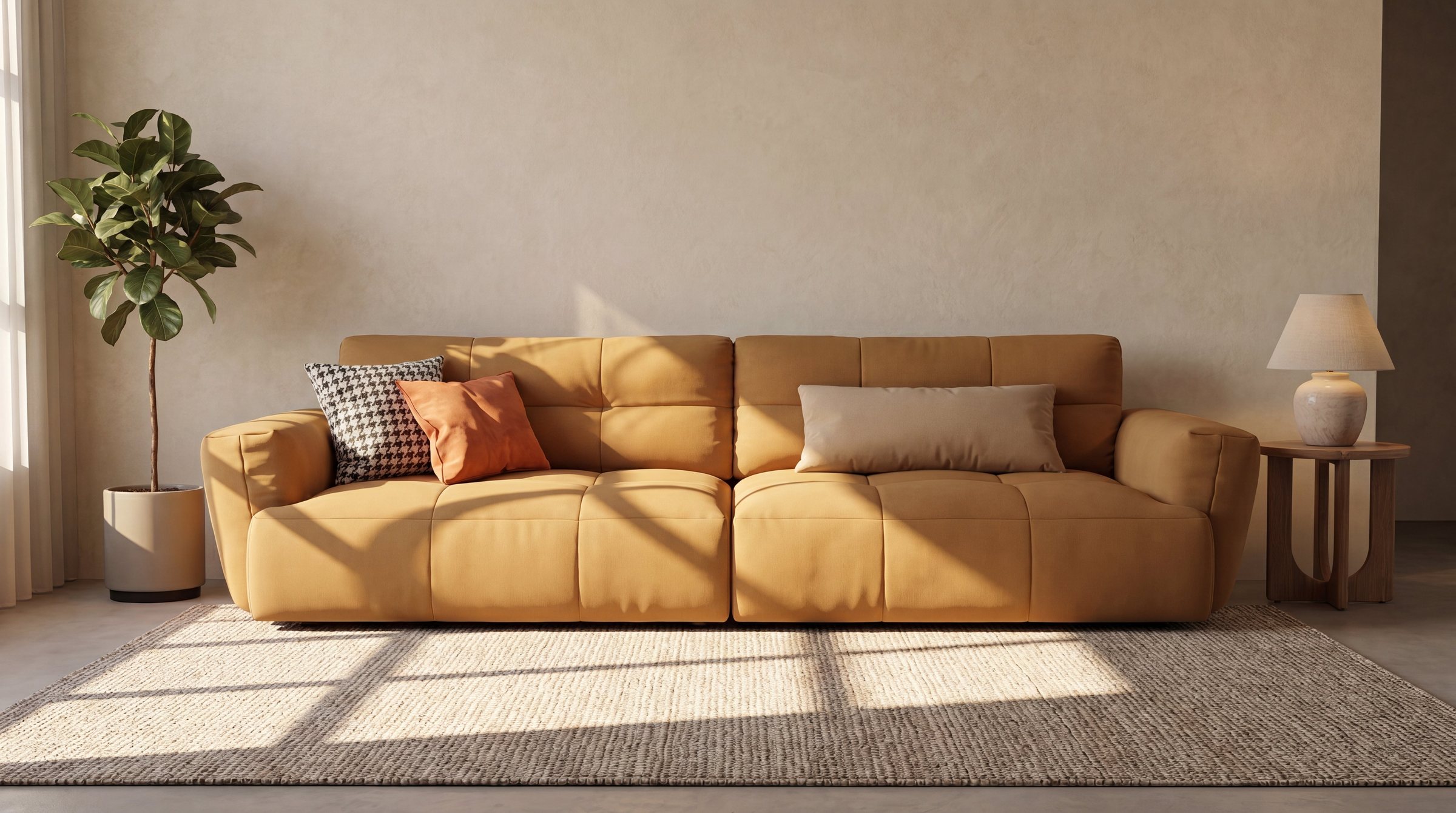
Fur shows most when it contrasts with the sofa. A pale cat on a dark sofa, or a black cat on cream, means a lint roller lives on the armrest. A colour roughly in your cat's range, or one with a little texture, hides a lot between cleans. Our fabric sofas come in six colours, from Alabaster Frost to Obsidian Midnight, with Desert Ochre, Nordic Slate, Moss Ore and Burnt Terracotta in between, so there's usually one that sits close to your cat's coat.
- Vacuum weekly with an upholstery attachment to lift fur and dander before they work into the fabric.
- Between vacuums, a lint roller or a slightly damp rubber glove picks up stray hair quickly.
- Deal with accidents and hairballs straight away: blot rather than rub, and check the care label before using any cleaner.
- Lay a washable throw on your cat's favourite spot. It catches most of the fur and goes straight in the wash.
Removable, washable covers are handy with pets, but not every sofa has them, and some covers aren't meant for a home washing machine. Ask the seller how a sofa's upholstery is cleaned before you assume. For spills, stains and the weekly routine, see our fabric sofa care guide.
Give your cat a better option
Even the most forgiving fabric works far better alongside a little training. A few things that help:
- Put a scratching post right next to the sofa. Cats scratch where they spend time, so a post in a far corner tends to get ignored.
- Choose a tall, sturdy post. It should let your cat stretch to full length without wobbling. Some cats prefer horizontal scratchers, so try both.
- Reward the right spot. Praise, a treat or a little catnip on the post helps it win.
- Make the sofa less tempting for a while. A throw or double-sided tape on a favourite corner discourages scratching there while the new habit forms.
- Keep claws trimmed. Shorter claws do less damage. Your vet can show you how to trim them safely.
Choosing a sofa with your cat in mind
One customer came to us with exactly this brief: a compact living room, a sofa that was "cat-proof", and a colour matched to their screed walls and flooring (you can read what they said on our reviews page). A brief like that is easiest to meet in order: settle the fabric's construction first, then find the colour within it.
Most of our fabric sofas use a fabric labelled scratch-resistant, and several are labelled water-resistant as well. The Mava and the Rirun both use a tech fabric labelled scratch- and water-resistant, over a solid wood frame with down-filled back cushions, and both come in sizes from a 1-seater to a 4-seater. As with any fabric, that label means better odds against claws, not a guarantee, so pair it with a scratching post nearby.
See the Rirun sofa →Browse our sofas →Cats don't stop at the sofa, of course. The same rules apply to an armchair or an upholstered headboard, so bring the fingernail test along when you browse our lounge chairs and bed frames.
Cats and sofas: common questions
- What is the best sofa fabric for cats?
- Usually a tightly woven, flat fabric with no loops, such as microfibre or a tech fabric. Claws have less to hook into, and fur tends to brush off.
- Is there such a thing as a cat-proof sofa?
- Not really. Some fabrics resist claws far better than others, but a determined cat can mark almost anything. A scratching post beside the sofa does a lot of the work.
- Is bouclé a good choice if I have cats?
- It's a risky one. Bouclé's loops are easy for claws to catch and pull, and pulled loops are hard to hide.
- Is a leather sofa good with cats?
- It's a trade-off. Fur wipes off and there's no weave to snag, but claw scratches and punctures show on leather.
- What sofa colour hides cat hair best?
- One close to your cat's coat, or a colour with a little texture. Strong contrast, like a black cat on a cream sofa, shows every hair.
- What does scratch-resistant fabric mean?
- It describes a fabric made to cope with scratching better than most. It isn't a guarantee against damage, so think of it as better odds rather than protection.