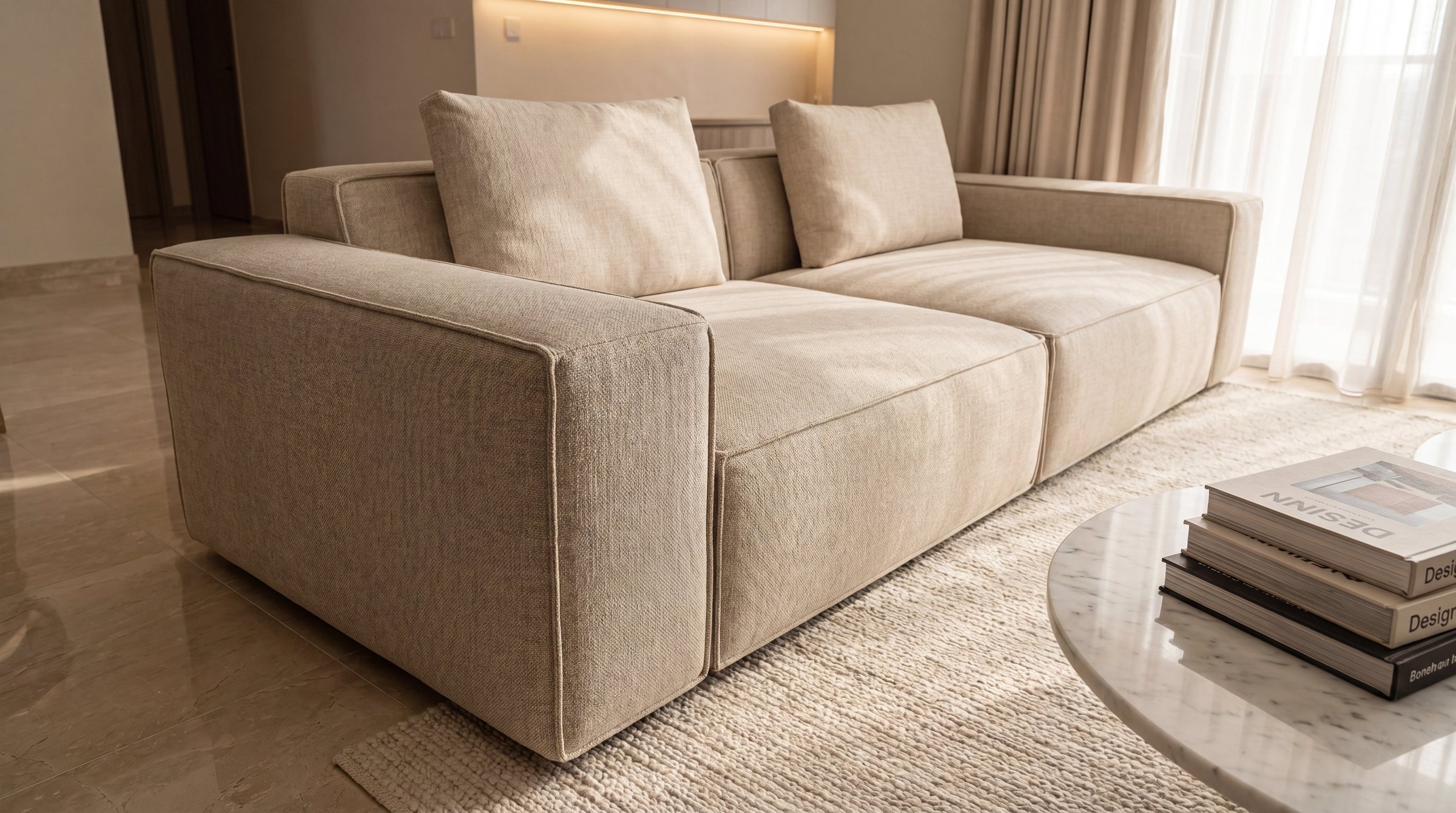

A fabric sofa is the softest seat in the house, and in Singapore it has a hard life: humid air, open windows, kopi on the armrest and the occasional curry night all leave their mark. The good news is that fabric care is mostly habit rather than effort: a weekly vacuum, a little attention to the cushions, and knowing what to do in the first few minutes after a spill.
Start with the care label
Before you clean anything, find out what your fabric can take. Look for the care label, usually under a seat cushion or on the frame. Our own care advice for most of our fabric sofas comes down to the same few things: spot clean with a damp cloth, vacuum regularly and keep out of direct sunlight. For some we add no bleach, or blot rather than rub. If you're not sure what applies to your piece, ask us.
Some upholstery also carries a cleaning code: W for water-based cleaners, S for solvent-based only, W/S for either, and X for vacuum only, no liquids. No code? Start with plain water on a damp cloth.
The weekly routine
- Vacuum once a week. Use the upholstery attachment over the seats, back and arms, and the crevice tool along the seams. It lifts the grit and crumbs that wear the fibres down, along with the household dust that mould feeds on.
- Rotate the cushions. If your seat cushions are loose, swap them around every week or two (and flip them, if both sides are upholstered) so the favourite seat doesn't wear faster.
- Mind the sun. Strong direct sunlight fades fabric, especially through a west-facing window. Draw the curtains in the hottest hours.
- Let it breathe. Leave a few centimetres between the sofa and the wall. Our guide to preventing mould on furniture covers the rest of the wet-season routine.
Down-filled cushions need plumping
Several of our sofas, like the Mava, have down-filled back cushions. Down gives them that sink-in softness, and it's also why they flatten where you lean. That's normal, not a fault. Every day or two, hold a cushion by its sides, push the ends together a few times like an accordion, then pat it back into shape.
See the Mava sofa →Spill first aid
What you do in the first few minutes decides whether a spill becomes a stain. Keep a clean white cloth within reach (white, so no dye transfers), then:
- Lift off any solids with a spoon, scooping towards the centre.
- Blot, don't rub. Press the cloth onto the spill, working from the outside in. Rubbing pushes liquid deeper and roughs up the fibres.
- Use as little water as possible. Blot with a cloth dampened in cool water. Soaking the fabric wets the foam underneath, which is slow to dry in our humidity.
- Test before you treat. If water isn't enough, try a drop of mild dish soap in a cup of cool water on a hidden spot first, and let it dry to check the colour.
- Rinse and dry. Blot with a cloth dampened in plain water to lift the soap, press dry, and let a fan finish the job. Skip the hairdryer.
Several of our sofas use water-resistant fabric, which buys you a little time before a spill soaks in. It isn't waterproof, so blot straight away all the same.
Stains by type
| Stain | What to do | Avoid |
|---|---|---|
| Kopi, teh, juice | Blot, then blot with cool water. Use the soap mix if a mark remains. | Hot water, which can set it |
| Curry, chilli oil, grease | Blot, then sprinkle cornflour or baking soda. Leave 15 to 20 minutes and vacuum. Follow with the soap mix if needed. | Starting with water, which spreads oil |
| Soy sauce, red wine | Blot quickly, then blot with cool water and the soap mix. | Leaving it to dry |
| Ink, marker | Blot only. Spot-test any ink remover, or call a professional. | Rubbing, which spreads ink |
| Mud | Let it dry, then brush and vacuum it off. | Wiping it while wet |
| Pet accidents | Remove solids, blot, then use an enzyme cleaner made for pet stains, spot-tested first. | Strong household cleaners |
Pets and fur
Most of our fabric sofas are upholstered in scratch-resistant fabric. It's made to stand up to paws, but resistant isn't scratch-proof, so a few habits help:
- Lift fur weekly with the vacuum's brush attachment, then a lint roller or a slightly damp rubber glove wiped in one direction.
- Give them their own spot. A washable throw on your pet's favourite corner catches most of the fur.
- Keep claws trimmed, and put a scratching post near the sofa.
- Don't pull a snag. Trim it level with the surface using small, sharp scissors.
Still choosing? Our guide to cat-friendly sofa fabrics covers what holds up, and our Mevin dining chair is upholstered in a scratch-resistant fabric designed with pet-loving households in mind.
When to call a professional upholstery cleaner
- A stain has set, or reappears after it dries.
- A spill has soaked into the foam, or a smell lingers.
- The mark is ink, turmeric or a large pet accident on light fabric.
- The care label says S, X or dry clean only.
- Mould has worked into a cushion.
For some of our pieces, such as the Pullo, our care advice includes a professional clean once a year, plus a fabric protector spray on light-coloured upholstery. A yearly deep clean is a good habit for any sofa in daily use.
If something looks more like a fault than a stain, such as a seam coming apart, tell us. Every piece comes with a 2-year warranty against manufacturing defects under normal use; it doesn't cover normal wear and tear or damage from improper care. Got a leather sofa too? See our leather sofa care guide.
Browse our sofas →Fabric sofa care: common questions
- How do I clean a fabric sofa at home?
- Vacuum weekly with an upholstery attachment and blot spills with a damp cloth. For anything stubborn, use mild soap in cool water, spot-tested first.
- Can I machine-wash my sofa covers?
- Only if the care label says they're removable and washable. Otherwise covers can shrink or change colour.
- How do I get an oil stain out of a fabric sofa?
- Blot it, cover it with cornflour or baking soda for 15 to 20 minutes, vacuum, then treat what's left with mild soap and cool water.
- Is scratch-resistant fabric OK with cats?
- It's made to stand up to claws, but no fabric is scratch-proof. Keep claws trimmed and offer a scratching post.
- Why do my down cushions look flat?
- Down compresses where you lean, which is normal. Plump the cushions every day or two to restore their shape.