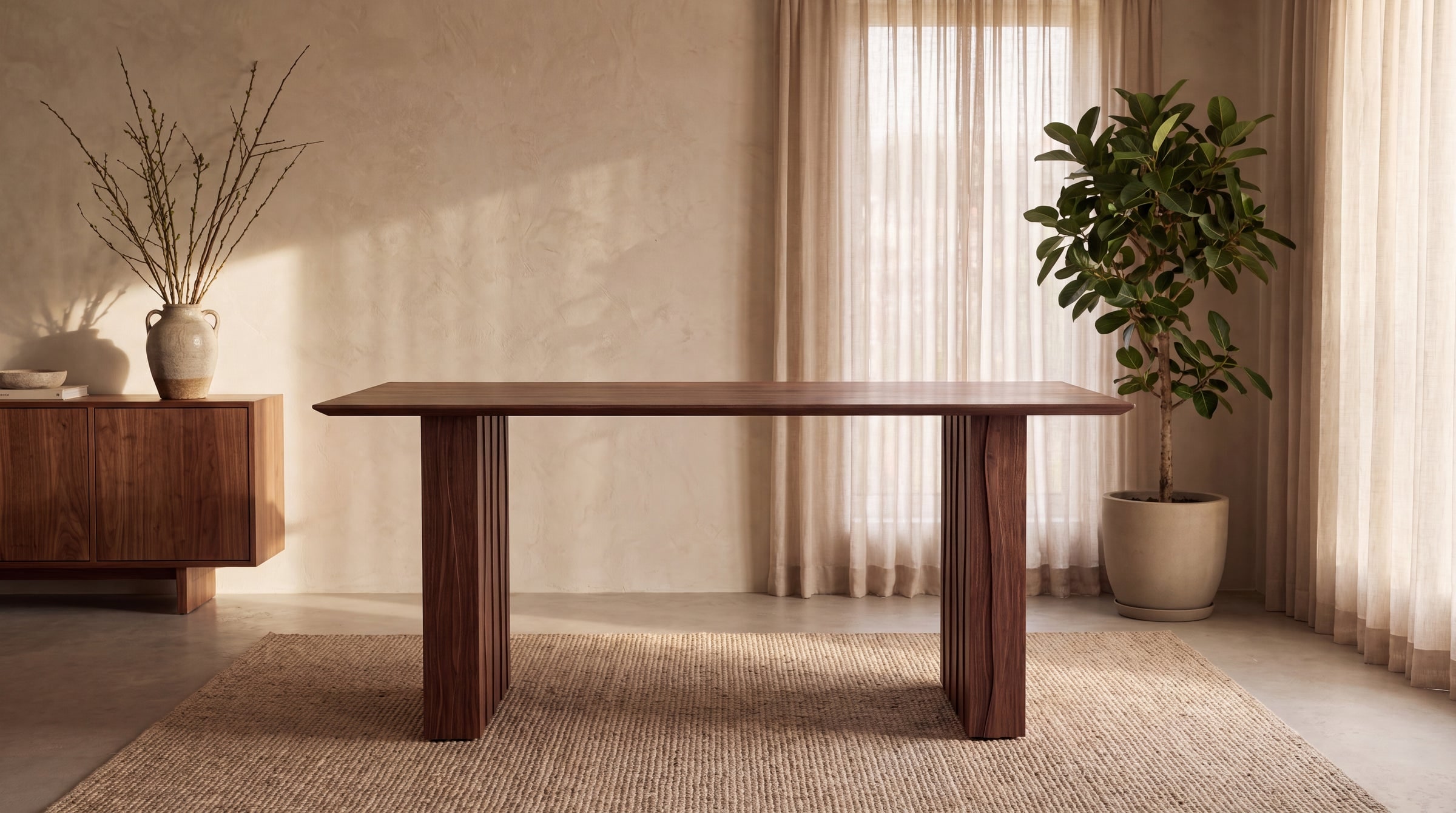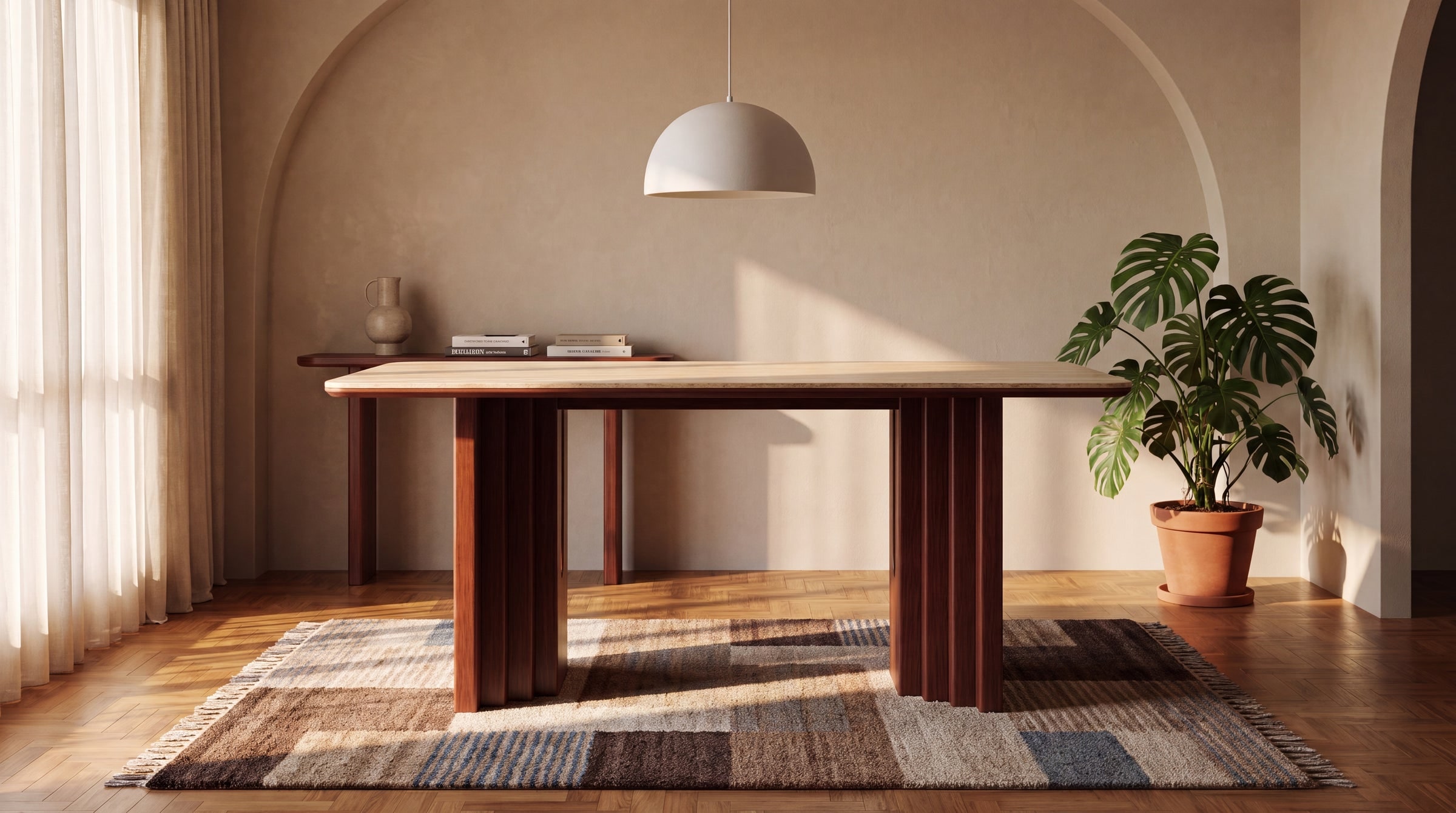
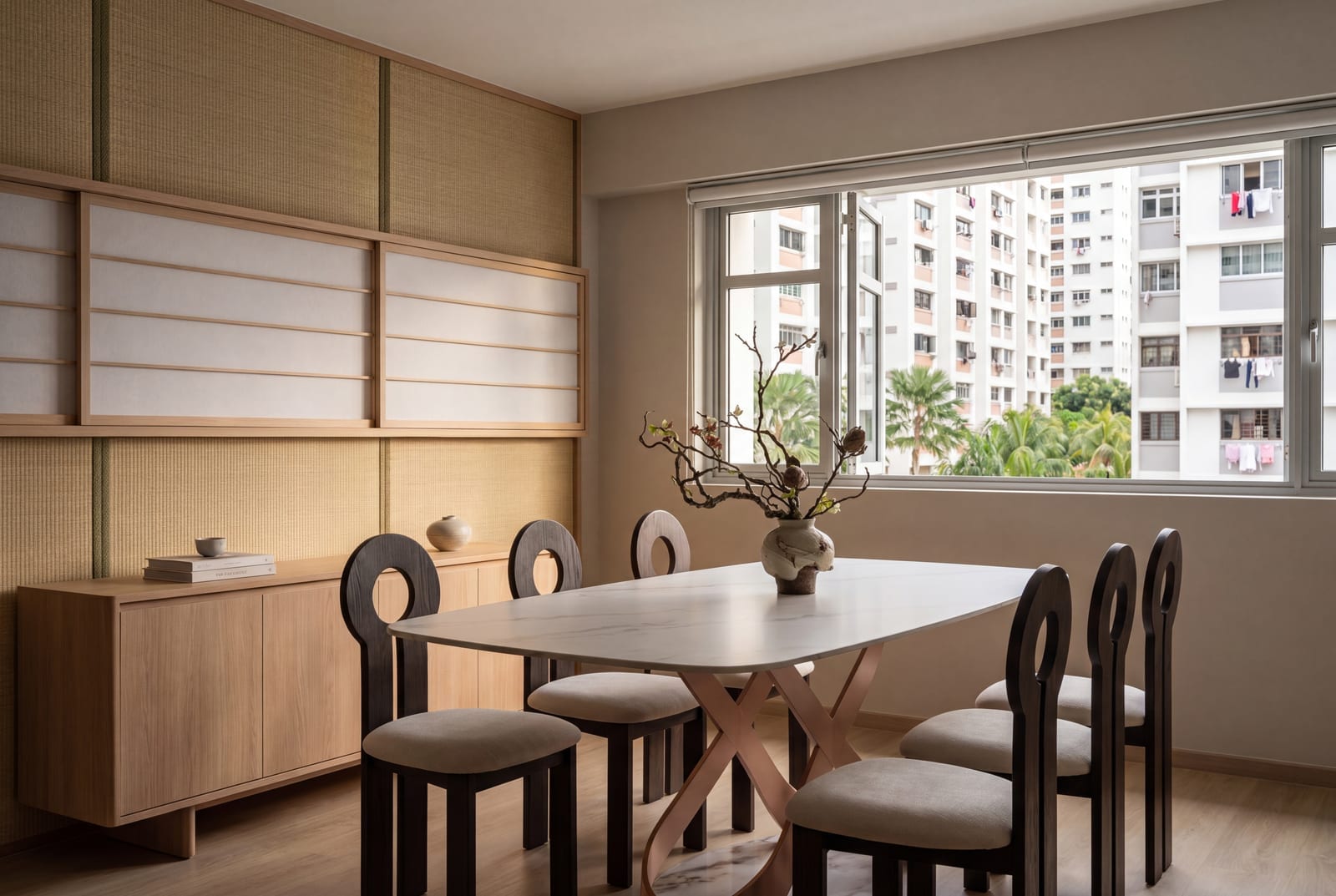
A stone table is one of the most hard-wearing things you can bring into a home, but "stone" covers materials that behave very differently. A sintered stone dining table will usually wipe clean after a spilled glass of wine. A marble one can be dulled by a squeeze of lemon, even if you wipe it up quickly. Knowing which you have is most of the work.
First, which stone is your table?
Every product page lists the top material under Materials. Across our range you'll mostly find four kinds:
- Sintered stone (sometimes listed as rock slab) is made by fusing natural minerals under intense heat and pressure. Most of our stone dining tables use it, including the Semia.
- Microcrystalline stone, on some coffee and side tables, is a man-made glass-ceramic with a glossy face. It's non-porous, so care for it much as you would sintered stone, though the gloss shows fine scratches more readily.
- Marble is a natural stone, prized for its veining. The Ravun dining table has a natural marble top.
- Travertine is a natural stone with warm tones and characteristic small pores. The Mesi dining table sets a travertine top on a solid wood base, and the Ramea coffee table is natural travertine.
If a top is listed simply as natural stone, care for it as you would marble. Some pieces have a printed or laminated stone-look finish rather than real stone, and the materials list will say so. For those, a soft damp cloth is the safe default; ask us if you're unsure.
Sintered stone vs marble at a glance
| Sintered stone | Marble and travertine | |
|---|---|---|
| Porosity | Very low: liquids sit on the surface | Porous: liquids can soak in and stain |
| Lemon, vinegar, wine | Generally unaffected; wipe up as normal | Acids can etch the surface, leaving dull marks |
| Heat | Copes well; a trivet is still a good habit | Use trivets; heat can mark the surface |
| Scratches | Highly resistant, though not scratch-proof | Softer; can scratch from grit or sliding ceramics |
| Edges | Can chip from a sharp knock | Can chip from a sharp knock |
| Sealing | Generally not needed | Recommended, and renewed over time |
Caring for sintered stone
Sintered stone is about as low-maintenance as a table top gets. It's so dense that most everyday spills, including oil, wine and soy sauce, wipe off cleanly, and it generally doesn't need sealing.
- Every day: wipe with warm water, plus a drop of mild dish soap for greasy marks, then dry to avoid water spots.
- Stubborn marks: a non-abrasive cleaner and a soft sponge. Skip scouring pads and abrasive creams, especially on high-gloss finishes, which show fine marks more readily.
- Mind the edges. Its weak point is impact, not wear: a heavy pot set down hard or a chair swung into the edge can chip it.
- Heat: it copes with heat far better than timber or natural stone, but a trivet under a pan straight off the stove is still a good habit.
Microcrystalline stone follows the same routine, minus anything abrasive at all; finish its glossy face with a dry microfibre cloth.
Caring for marble and travertine
Marble and travertine are softer, porous and sensitive to acids. That's the trade for their natural character, and it simply means a few more habits.
Etching vs staining
- Etching is a dull, lighter patch where an acid has reacted with the surface. Lemon, vinegar, wine, tomato, soft drinks and some cleaners can all do it, and wiping doesn't undo it.
- Staining is a darker mark where a liquid has soaked into the pores: coffee, oil, soy sauce, curry. It's in the stone rather than on it.
Sealing helps with staining but not with etching, which is why coasters and quick wiping matter even on a sealed top.
Sealing and the water test
A penetrating stone sealer fills the pores so spills take longer to soak in. Sealers wear down with use and cleaning, so even a top that arrived sealed benefits from resealing over time. To check, drip a little water on a few spots and wait about 15 minutes. If the stone darkens, it's time to reseal with a sealer made for natural stone, following its instructions.
Everyday cleaning
- Wipe with a soft cloth and warm water, or a cleaner labelled pH-neutral or safe for natural stone, then dry.
- Never use vinegar, lemon, bleach, ammonia, bathroom sprays or abrasive powders. Many natural cleaning hacks are acidic.
- Blot spills promptly rather than wiping them across the stone.
- On travertine, brush crumbs out of the small natural holes with a soft brush so food doesn't sit in them.
If your stone table stands on a solid wood base, like the Mesi, our guide to caring for solid wood covers the timber side.
See the Mesi travertine dining table →Habits that protect any stone table
- Coasters and placemats guard against etching, stains and scratches from rough ceramic bases.
- Trays for bottles. Keep cooking oil, sauces, perfume and candles on a small tray rather than directly on the stone.
- Lift, don't drag. Grit under a vase scratches as it's pushed across. Felt pads help.
- Don't cut directly on the top. Use a chopping board, whatever the stone.
- Respect the edges. Any stone can chip from a sharp knock, so take care with heavy items near the edges and corners.
Chips, etches and deep stains
A small chip on a stone edge can often be filled with colour-matched resin by a stone repair specialist. Light etching on polished marble can sometimes be buffed out with a marble polishing compound; deeper etches and set-in stains are a job for a stone restoration professional. Don't sand or grind it yourself.
If something looks like a fault rather than a mark, tell us and we'll take a look. Every piece is built to order and comes with a 2-year warranty against manufacturing defects under normal use; it doesn't cover misuse, improper care or normal wear and tear. For the rest of the living room, see our guides to fabric sofa care and leather sofa care.
Browse our dining tables →Browse our coffee tables →Stone table care: common questions
- How do I clean a sintered stone dining table?
- Wipe it with a soft cloth, warm water and a drop of mild dish soap, then dry it. Avoid scouring pads, especially on a high-gloss finish.
- Does sintered stone need sealing?
- Generally not. It's dense, with very low porosity, so liquids sit on the surface rather than soaking in.
- Is sintered stone or marble better for a dining table?
- For everyday family meals, sintered stone is lower-maintenance and more resistant to stains, scratches, heat and acids. Marble offers natural veining and character, but needs more care.
- What's the difference between etching and staining?
- Etching is a dull mark where an acid has reacted with the surface. Staining is a darker mark where a liquid has soaked in. Sealing helps with stains, not etching.
- Can I clean a marble or travertine table with vinegar?
- No. Vinegar is acidic and can etch the surface. Use warm water or a pH-neutral cleaner made for natural stone.